Thursday, January 29, 2015

TJ: Mini-Sea: #7

Aquarium Status

Day 9

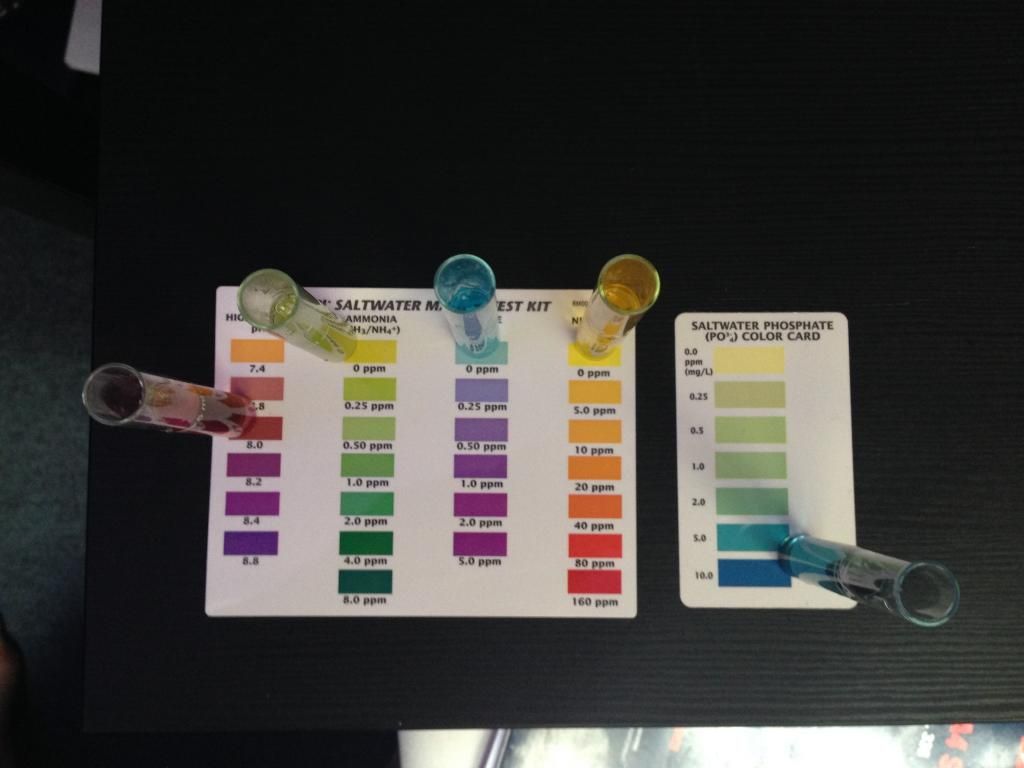
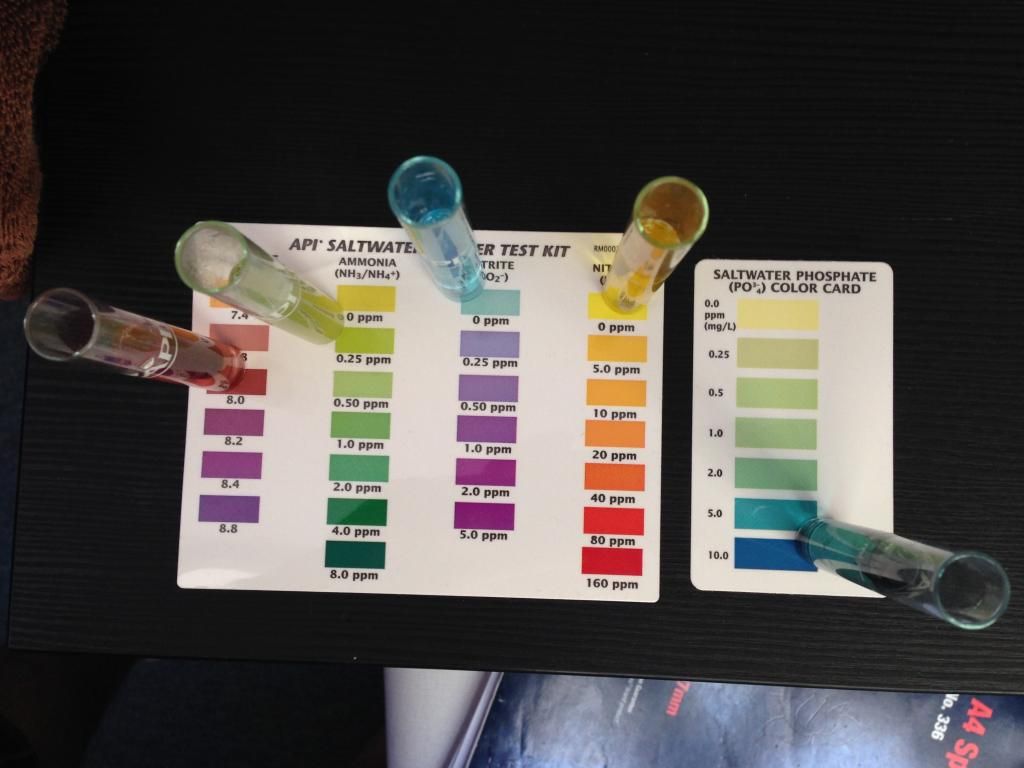
Tested my water today. Here are the results:
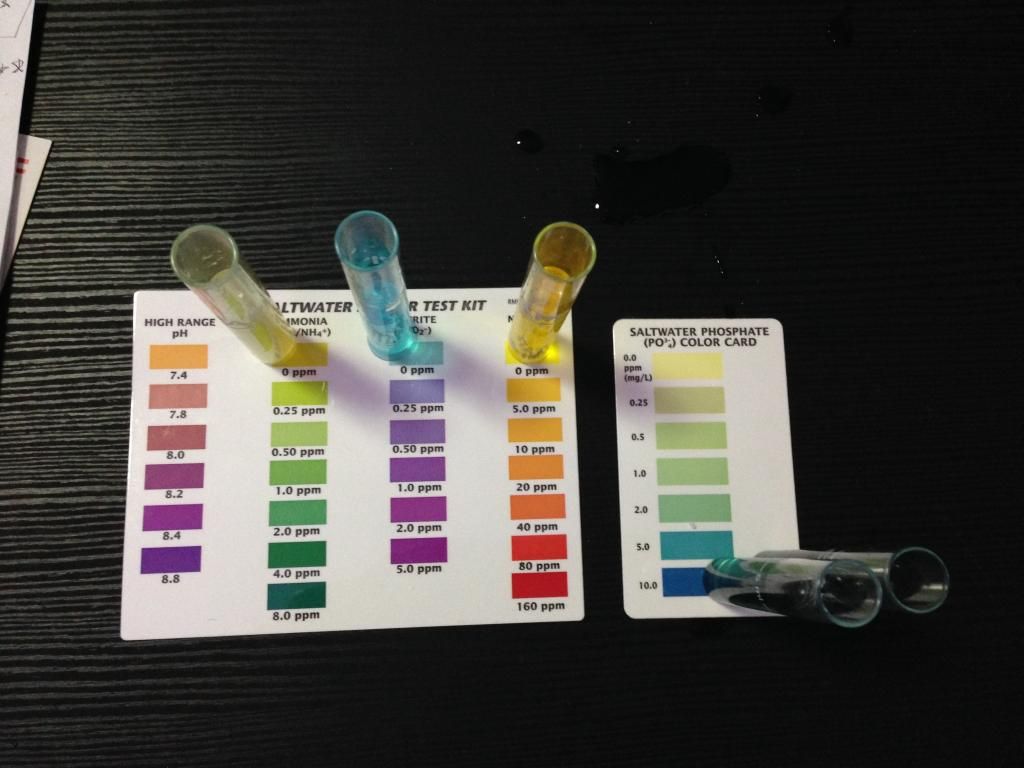

Test results on 27/01/2015, approximately 12 hours after addition of fish food.

Ammonia:0ppm
Nitrite:0ppm
Nitrate:0ppm
Phosphate: 10-20ppm
pH:8
kH: 9
Calcium: 620ppm

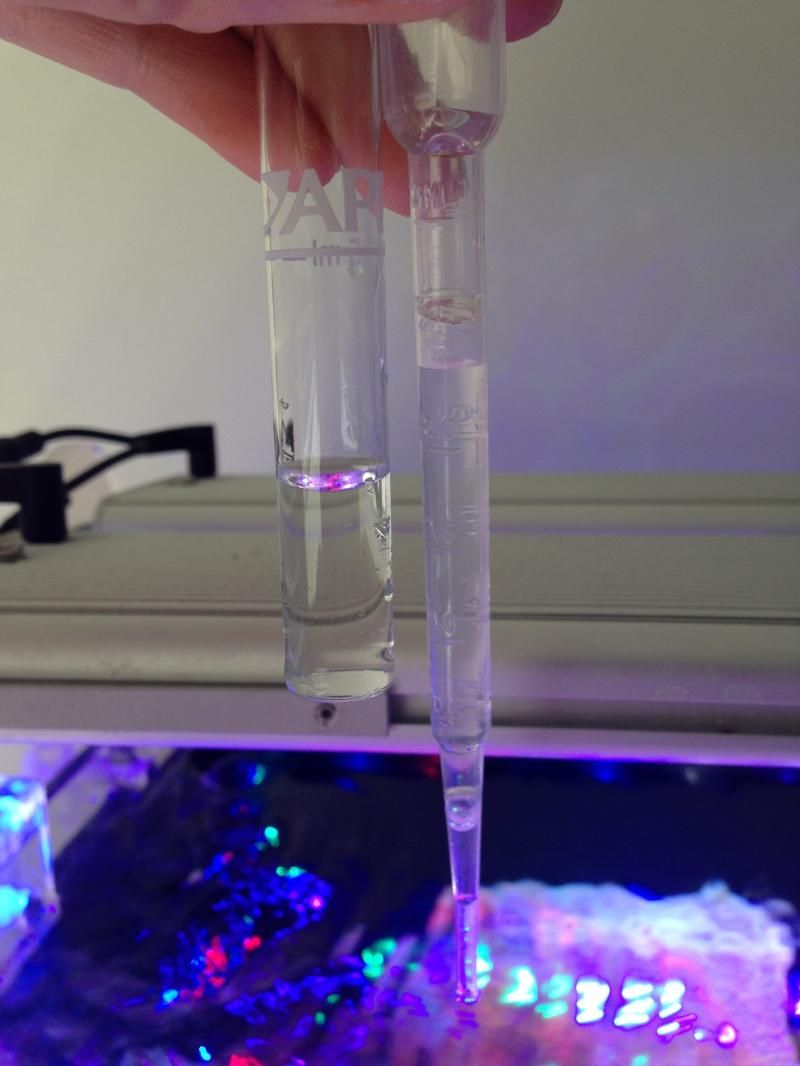
Yep, ANN zeroed out quickly post-feeding, though phosphates is off-the-charts again. Also excuse the bad picture quality, I had to take the picture quickly since I spilled the nitrites test (hence the liquid towards the top of the picture). >_<"

In hindsight I could probably have just mopped it up first.

Anyways, so this is where the microbe propagation phase has been completed. It means that in conjunction with everything else, there is enough microbe to quickly take care of any organics that is added, at least in terms of ANN.

Anyways, this does mean that it is ready for fish, though not quite for corals.

So I did a huge water change (roughly 90%).

Emptied as much as possible into a 20 litre drum I have.
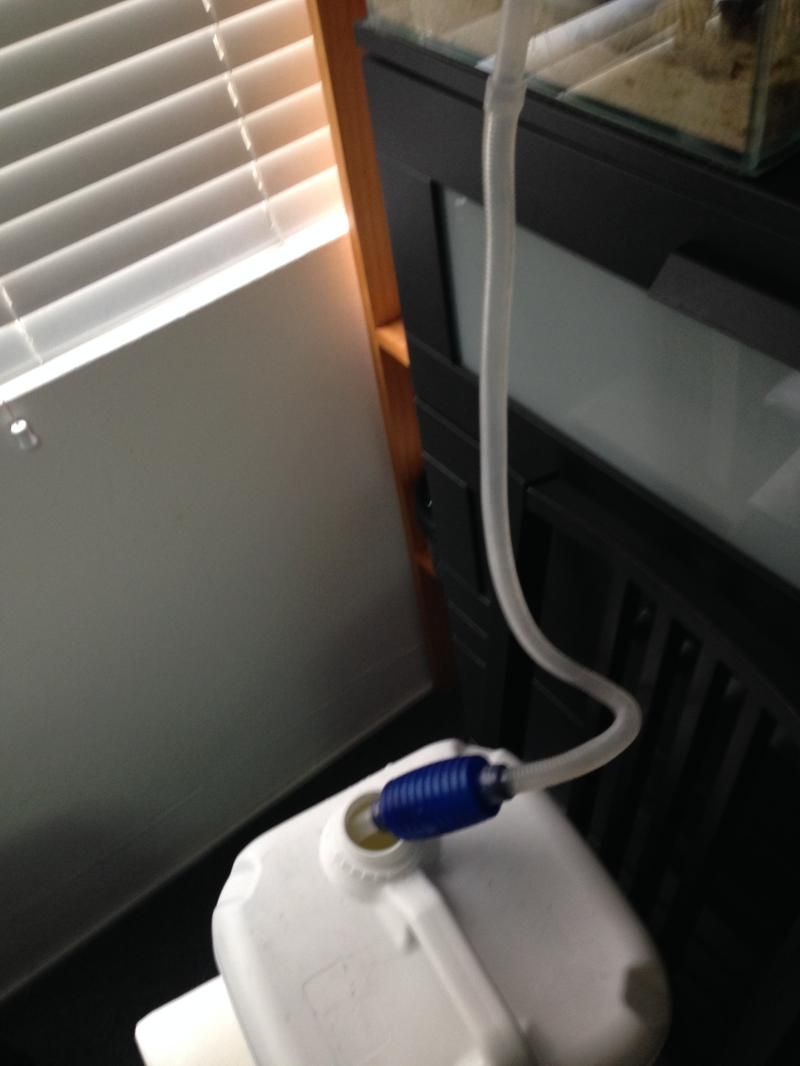

This is normally my RO drum, but at that moment it was empty, so I used it for the water change.

And then well, I had another filled with saltwater, which I then proceeded to refill the tank with.
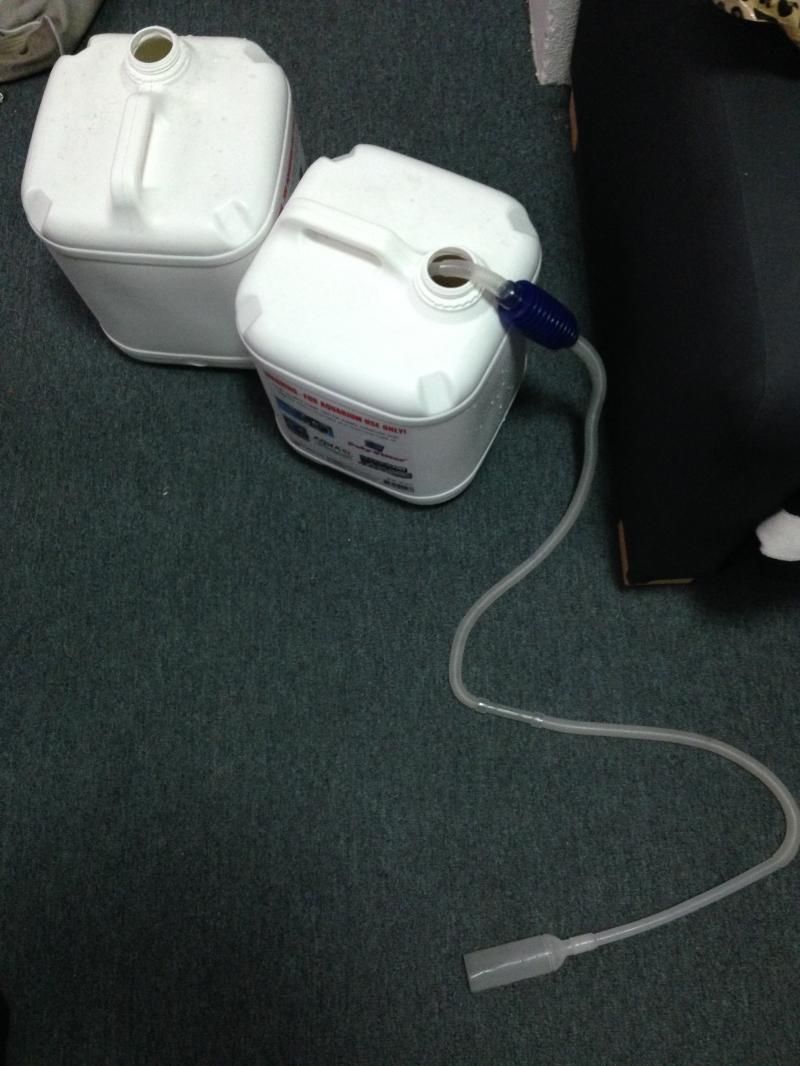

Usually one of the drums is for salt water, the other for fresh. Here is displayed a very simple apparatus as well, for water drainage. Bought it off ebay for like $3. Been using it for 3 years.

It is always good to have two containers to do water changes. Nobody is ever the best estimators, and well, at least for me, I can never seem to estimate the amount I am changing out and in right. This ensures that a.) you are changing the same amount and b.) if you happen to not have enough water to add due to miscalculations, that you are not panicking and finding a source of saltwater half-way through a water change.

After the water change, I did test phosphates, because that was what I was most worried about. The result was at 1-2ppm, which made sense, since I did change roughly 90% of the water. Of course this is still high for corals, but for fish that is fine.

And so the plan would be to re-stock the tank the next day.

Day 10

It was raining, though I did have a chance to go to the beach. Of course, I just had to fall down and sprain my tendons in my wrist on the same day.

Came to the beach and managed to spot a single nice piece of red macroalgae (same species as what I already have. It seems like it is rare for this to be washed up on shore though. The picture below shows the amount of macroalgae washed up, and I only found one piece.

Maybe it is rare. Or maybe it is uncommon for it to still have color when it is washed up. Or maybe it doesn't break off as easily as everything else (I doubt it though). Whatever the case, there are so much algae there, but nothing that I definitely want. I may take a picture of a few for IDs, but I really do not want anything else in my aquarium except for this, or other red macroalgae species. Don't even want a chance that something else spreads.
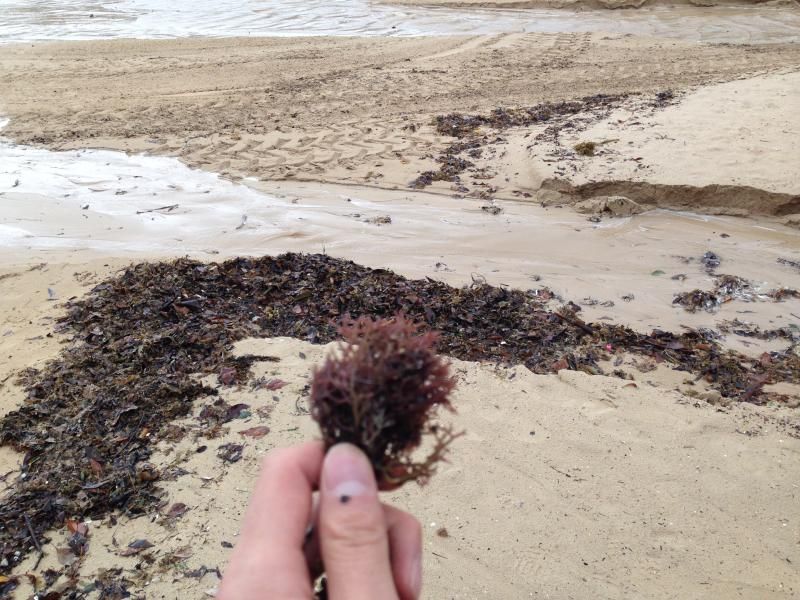

A gem amongst all that.

Of course, I had to fall down (again) and smash it all. :(

Here is what it looks like at home:
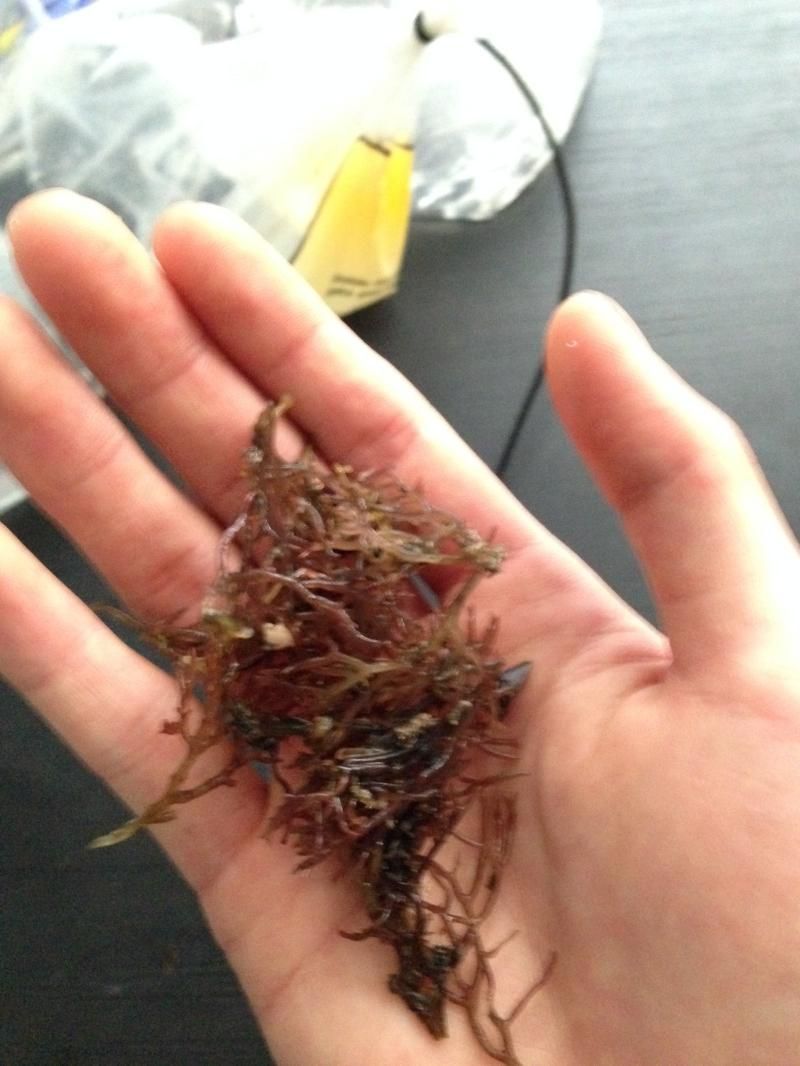

Being tiny bits and pieces, I chucked it all in the sump instead of the display. What a shame.

Oh and yes, the bags behind are the fish.


My babies are back! All four of them. I had to board them whilst I was on holidays.

Yes, I am fully aware that the bags are deflated and look like crap. That was the best I could do with just one uninjured hand. But hey, it was a short trip anyways.

Of course, I had to forget the fish food. Will be getting it the next time I come back.

Anyways, I added the fish to the aquarium. My acclimatization is very complicated.

Step 1: Open up bags.
Step 2: Scoop out the fish and put into water.

Okay, I don't recommend this all the time, but the number one rule of the hobby is be flexible. The fish are healthy and happy, and really the more time they are in the bags or not in the tank, the more they would just be more stressed out. In this case it is better to let them in.
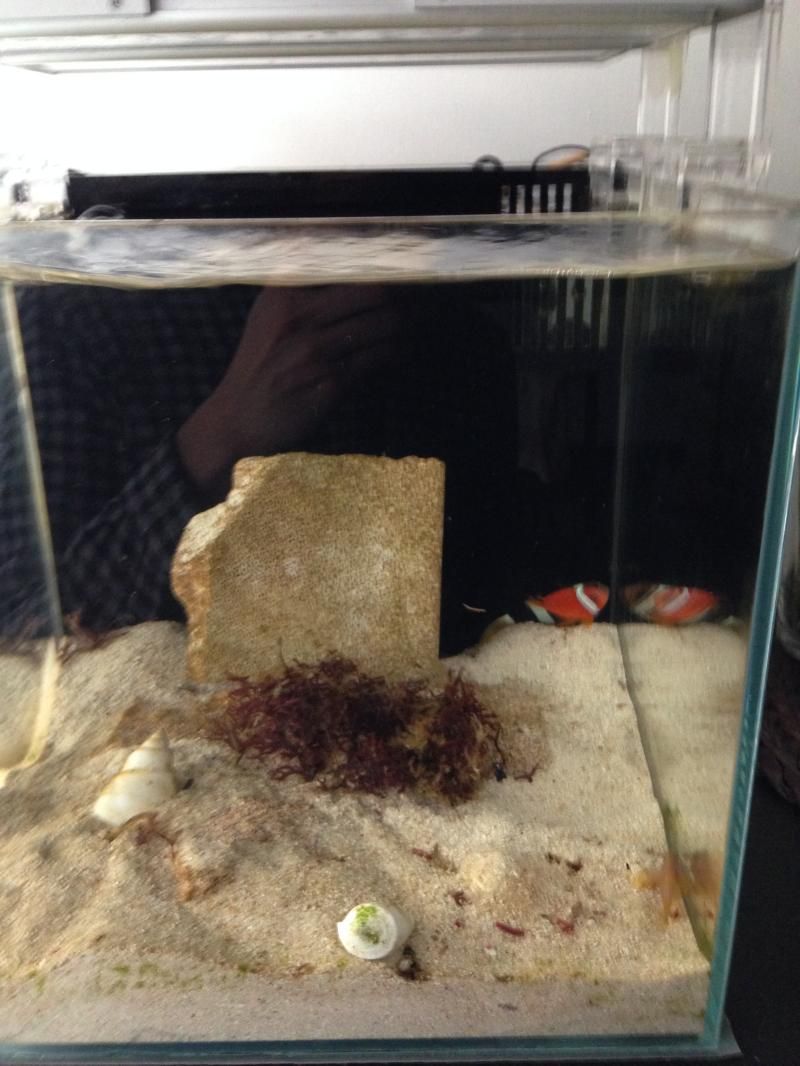

Just added. Fish are panicking and stressed.


 Literally five minutes later. 'Were we sitting in bags for the last few hours? I didn't even know. I thought we've been here all the time.' says the fish, swimming around happily.

They were breathing heavy initially, but very quickly were back to their active selves. This is very important to note - healthy fish should be active (unless they are specifically supposed to be otherwise). They should not be stuck to a corner, especially up towards the top corners of the aquarium. That is an indication that they are not happy. If they swim around doing stuff, that's great.

Day 11
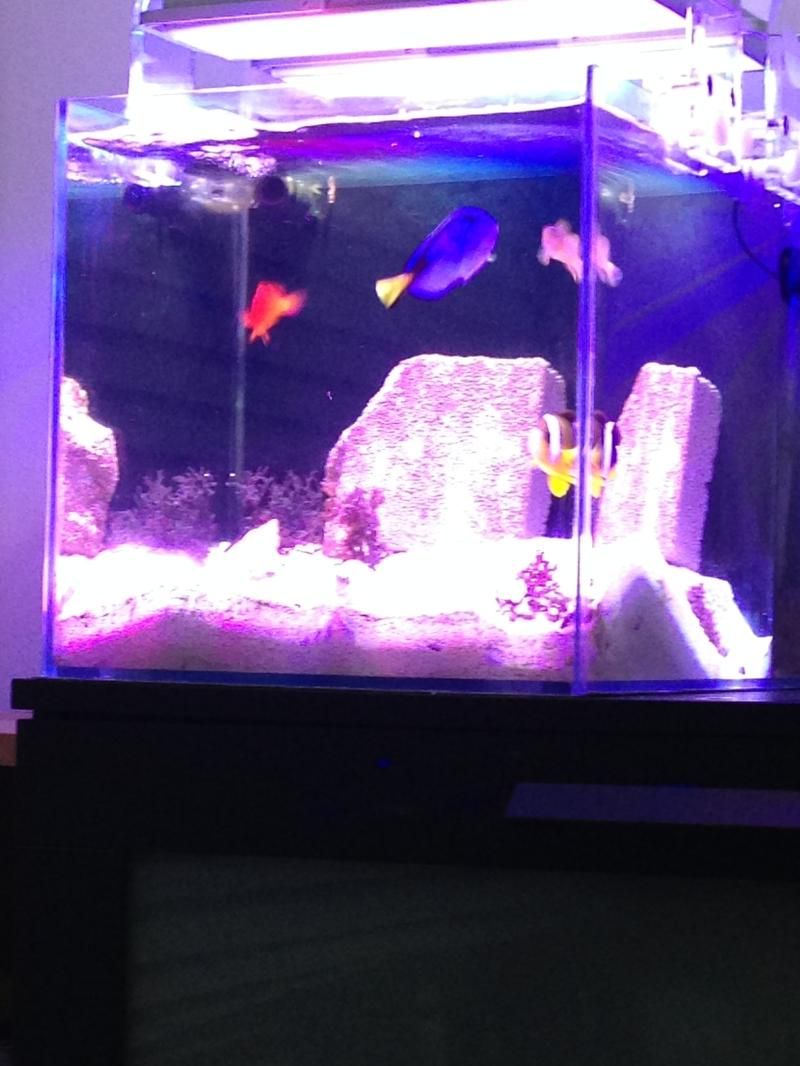

My view from where I normally sit and work.

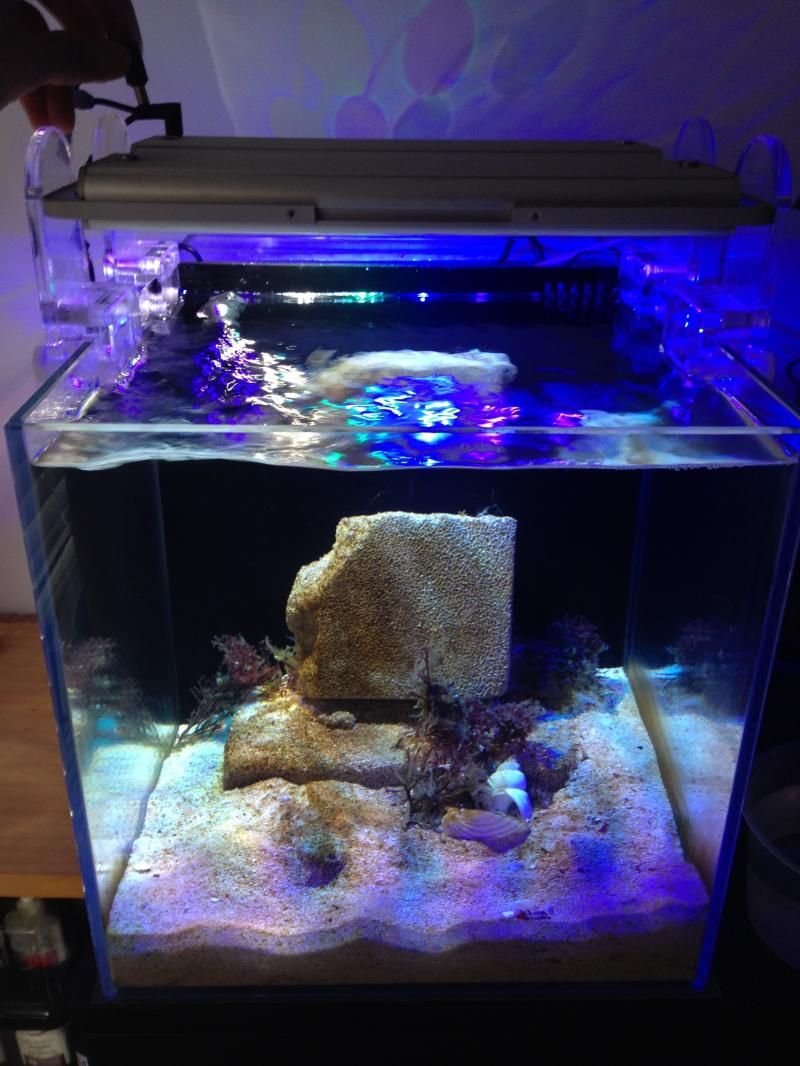
Here is the newest view of my aquarium. As you can see, all the fish are towards the front, exploring it. Soon enough there will be corals as well for them to enjoy, but for now it is quite bare.

Interestingly enough, the Regal Tang picked at the macroalgae, eating all the dead bits and pieces (or well, the parts covered in green) leaving just the red behind. So the macroalgae now also looks a lot better.

They are back to their usual antics, digging pits in the sand and all that. :) In fact, they are so active that it is impossible to take any clear picture of them! Oh believe me, I tried. Many, many, many times.

JUST A WARNING!

By the way, one big thing that I should mention. Whenever you read tank journals, such as mine for example, be aware of everything before copying what I do, as although I - and practically anyone else - would strive to provide heaps of information in tank journals, tank journals are just that - journals, and the information is whatever we like to provide.

For example here, please do not think that you can keep a Regal Tang in this size tank forever. Regal Tangs grow very large, and in this aquarium it is a temporary resident. I am either getting a bigger tank for it, or will move it on when it grows bigger, maybe in as short of a time period as a few months. A few weeks even, if it grows bigger that fast.

This could have been something I keep in my head rather than writing it out, so with anything, make sure you understand why such things work before attempting it.

Cheers!

Monday, January 26, 2015

TJ: So Sinuous: #0

Aquarium Status

Introduction

This is a tank journal for my Fire Pico tank. It is a 26.5cm cube aquarium, with a back sump and a Tunze return pump. Intending to make this an experimental setup with Plerogyra sinuosa, a species of Bubble Coral. The focus will be to get them to grow, of course.

Tank Setup

I have an Vitapet 100w heater lying around, which I may use. I am not sure actually, if there may be a problem. Gotta check on that.

Otherwise, I plan to utilize macroalgae in the back sump as my main filtration media there.

In the display, there will be coral sand and 1/8th of a Marine Pure block to place the Bubble Corals.

Otherwise everything will be stock equipment (return pump and lighting).

The Plan

The plan is to get five very small Bubble Corals, and let them develop.

I may or may not be dosing supplements, depending on how well water changes work.

Otherwise, planning to use New Life Spectrum to feed the corals.

My plan is also to 'let it be' as much as possible, i.e. not disturb except to do water changes.

My aim is for the Bubble Corals to spread and hopefully embed themselves onto the Marine Pure block. This has never been done, so I do not know if it will work, but I do hope so.

Oh and I am hoping to add various organisms such as brine shrimp, copepods and the likes into the aquarium as well, and hopefully the amount of algae in the back sump can provide a home for them. If that works out, the main food for the Bubble Corals may be live food, fed on New Life Spectrum or whatever.

Anyways, that's the plan.

So far, the aquarium is ordered, so... well, it is a waiting game. That is also why there are no pictures for this update.

But, stoked!

Sunday, January 25, 2015

TJ: Mini-Sea: #6

Aquarium Status

Cycling, Day 8

Tested my water today. Here are the results:


Test results on 26/01/2015, approximately 72 hours after the last addition of pureed seafood mix.

Ammonia:0ppm
Nitrite:0ppm
Nitrate:0ppm
Phosphate: 8-10ppm
pH:8
kH: 9
Calcium: 620ppm

So ANN has  now zeroed out, which is great. Phosphate is still high, around 8-10ppm.

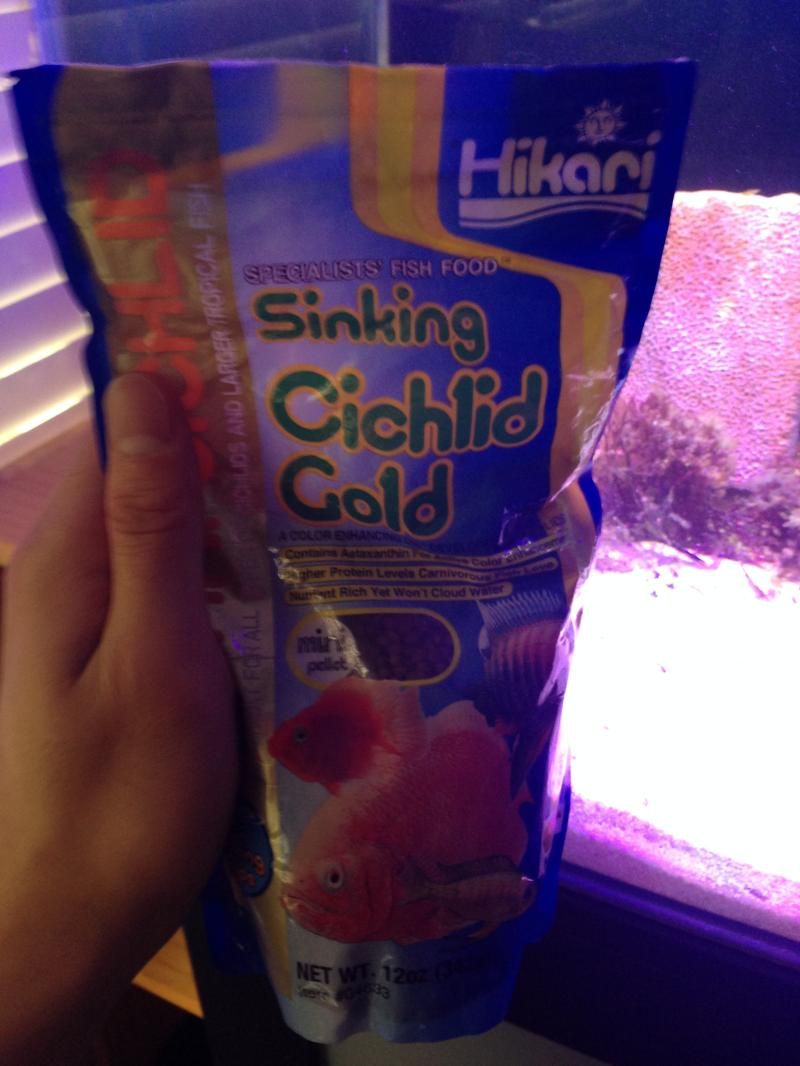
Given that the microbes I am aiming to grow seems to have been established, I have proceeded to test their filtration capability. This process requires ghost feeding, but of course, I left my fish food with the caretaker of my fishies... elsewhere.

So instead, I have this:


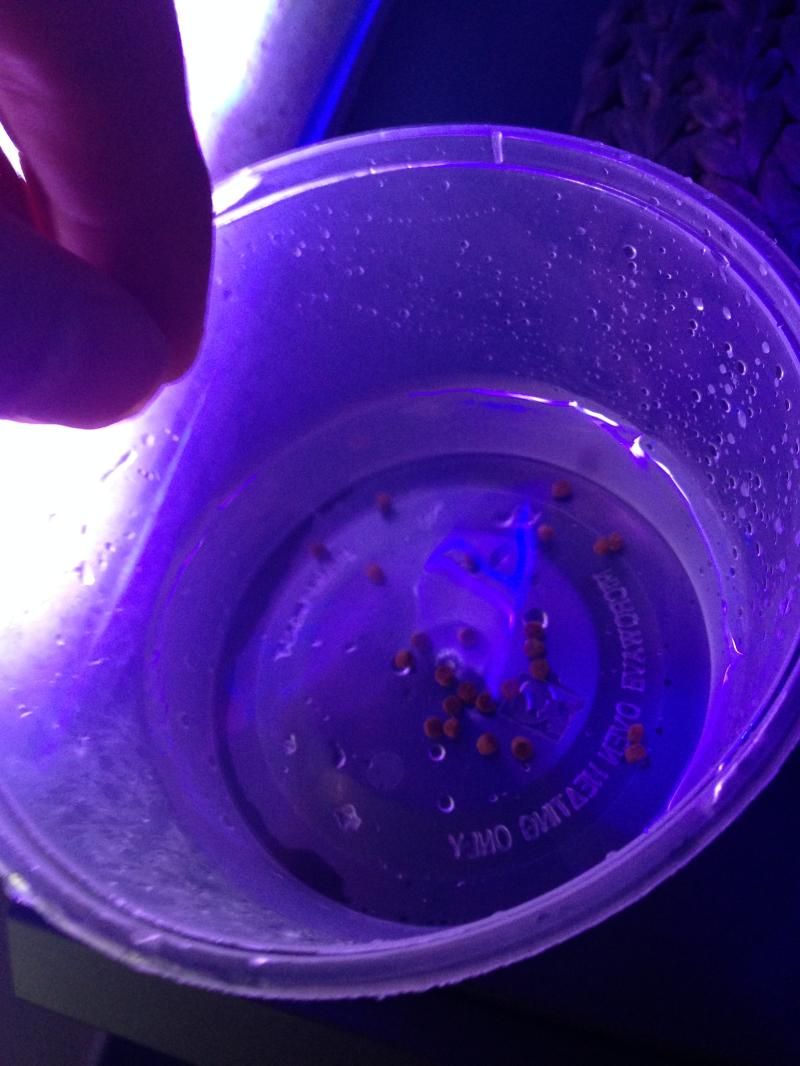
Anyways, took out the equivalent to how much I feed my fish:
A lot? A little? I dunno. My fish eats this much. So I feed 'em this much. 'Just right' then.

And mix it in some tank water:


The proper way would be to grind it up, but I was lazy.

And add it to the aquarium:


Eat, microbes! EAT. You too, macroalgae. Go go go!

It would be much better to break up the food, to better distribute it throughout the aquarium. This is because when fish eat 'em, the food do get digested and turned into poop, which well, breaks apart much easier.

However, it is not the end of the world, using unbroken pellets. Just gotta manually break them up later on, when they soften. Every 30 minutes or so.

I'm not going to show myself doing that though. >_> I am not going to update this tank journal every half an hour, detailing how it was broken up.

But you get the idea.

Anyways, will test the water tomorrow to see how it fares. If ANN zeroes out by then, then the aquarium has gone through the microbe propagation phase successfully. :) Of course, I still have the phosphate problem to deal with.

My macroalgae is still recovering. And microalgae is refusing to grow quickly, for whatever reason. I would have thought my tank would be covered with diatoms by now... with all that phosphate. Maybe nitrate is the limiting factor? XD

Arghhhhh.

Saturday, January 24, 2015

TJ: Mini-Sea: #5

Aquarium Status

Cycling, Day 7 - Cycling Done? No!

Tested my water today. Here are the results:


Test results on 25/01/2015, approximately 46 hours after the last addition of pureed seafood mix.

Ammonia:0.25ppm
Nitrite:0ppm
Nitrate:0ppm
Phosphate: 8-10ppm
pH:8
kH: 9
Calcium: 620ppm

Compared to yesterday,  there's been a huge drop in ammonia, nitrite and nitrate. This is great news, as it shows that the system is being able to filter the water well. Looking at these results, one would think that the initial cycle is nearing an end...

But! It is not. Let's take a look at the results again. ANN is low, but phosphate is high. Not as high as it was before though. Today I checked, and the color wasn't as dark of a blue as previously. I was curious as to what the exact numbers were, and so I decided do a serial dilution to get more precise numbers. The result is somewhere between 8-10ppm.

How did that result? See my guide on measuring through serial dilution here.

This is a very important factor to consider, as if I were to add live stock now, there could be major issues. The macroalgae don't seem to care less, fish perhaps not, but corals definitely. And anemones too. And a host of other organisms.

So if your live stock is dying right after adding them after you think your cycle is done, then consider this.

Macroalgae Status

As for my macroalgae, they are still alive.

It seems like their recession has stopped completely. They still have bits and pieces of dead tissue attached to them, just waving back and forth in the water. But otherwise, they are looking great!

There are more and more nodules growing all over. Someone else have identified them as air sacs, to keep them upright.

So we now have theories saying:
-They are results of infection.
-Tumor growth.
-Spore sacs.
-Normal growths (that will extend into branches).
-Air sacs.

I am in the process of confirming with each person about how they got to the above opinions. Once I get a conclusive result, I'll post it here.

Equipment Changes

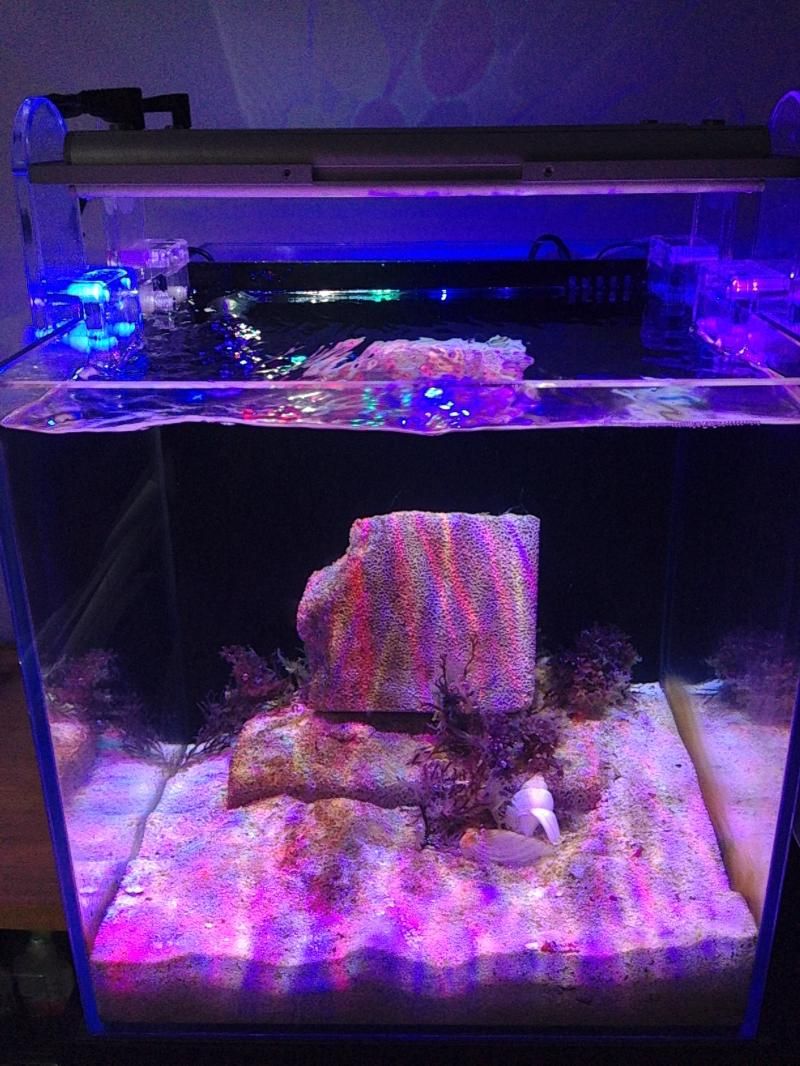
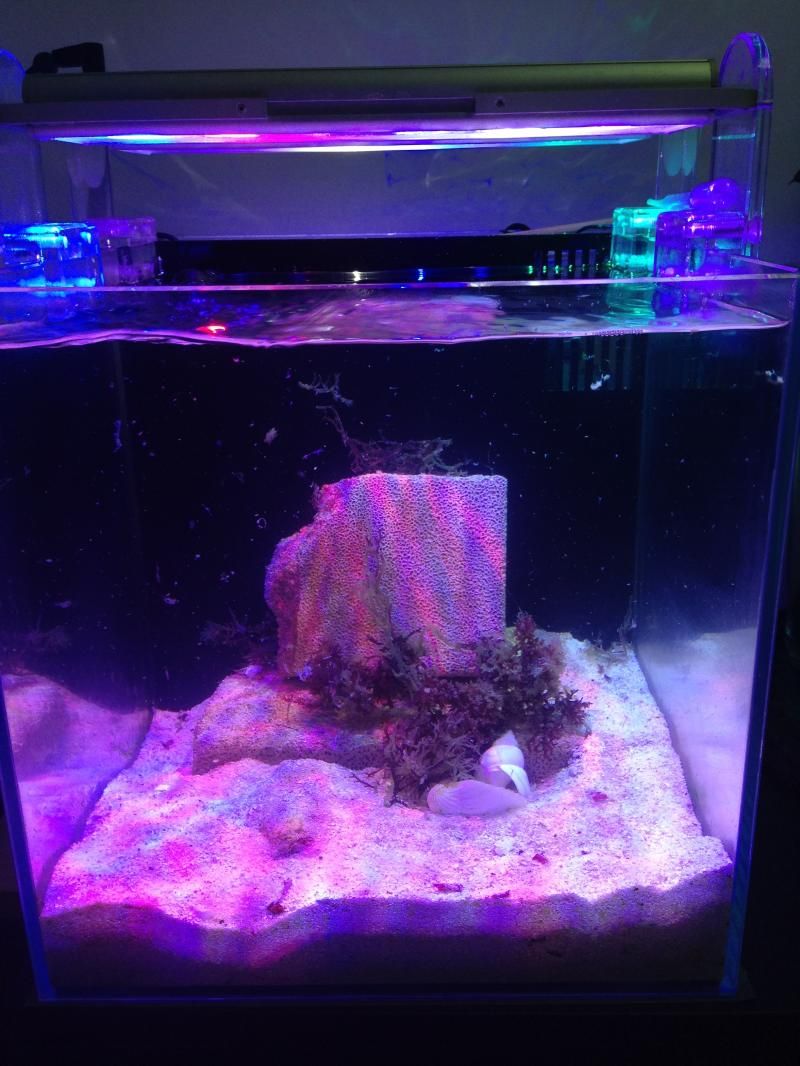
I made some changes to the lighting. I wasn't happy with the layout of the LEDs in one of my ComboRays (the one towards the back) so I swapped the LEDs around. Initially a cyan was to the right side of the tank, and it just looked odd. So I moved the cyan to the third spot from the left, the cool white left of it, and the violet to the end where the cyan was.

Here are the comparisons:


Before and after. Ahaha excuse the fact that there are diatoms or something growing all over in the current picture, and the cloudiness of the first.

Anyways, more importantly:


I felt that previously it was a lot brighter towards the right side (as most of the brighter LEDs were to the right. Just so happens... lol.

Now the color is a lot more evenly distributed. :D

That's all for today's update. Let me know what your thoughts are!

The Serial Dilution Method to Measure 'Off the Charts' Parameters

Introduction

Have you ever done a test and saw that your parameters were off the charts? As in it was the highest on the color chart? Did you ever wonder what the parameter was exactly?

Well there is way to get a much more precise measurement, through the serial dilution method.

This guide will run through how to make serial dilutions, up to 1/8th and how to calculate the concentration from that.

Steps

Step 1: Make up the undiluted specimen.

This is just 5ml of tank water.

Step 2: Make up the first diluted specimen.

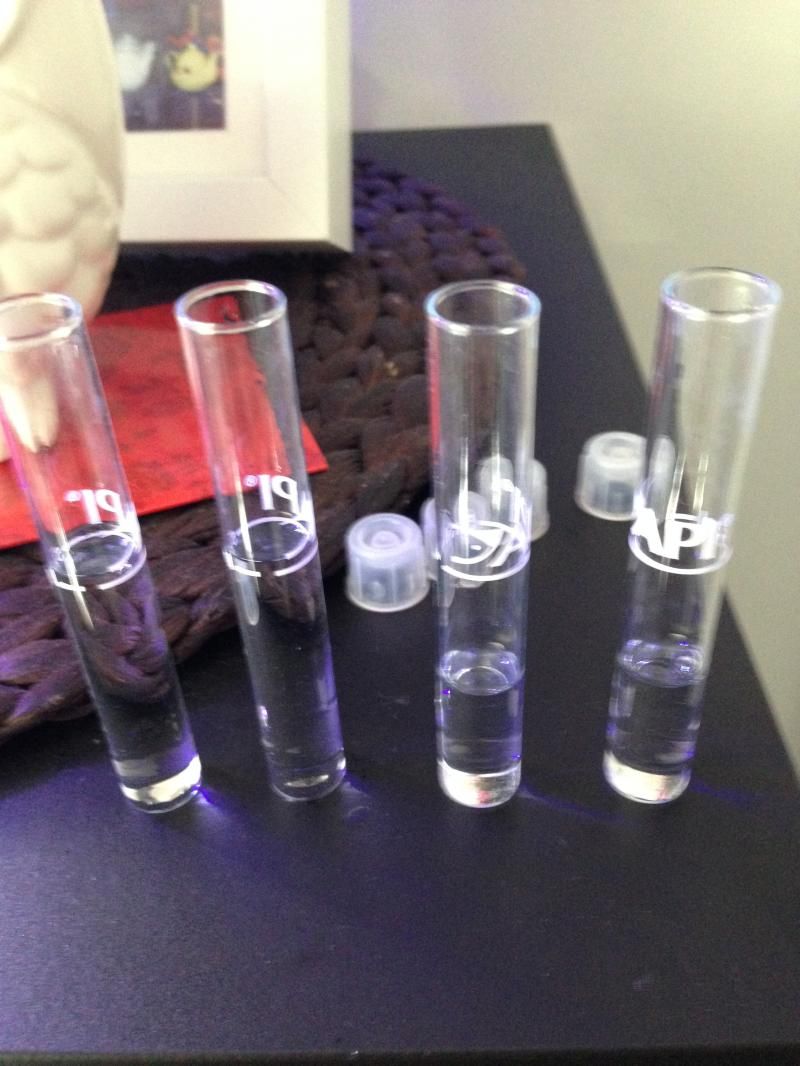
Take 5ml of tank water and fill up the next container (in this case, a tube). Then, take half of it out:

Half-half.

Add the other half to a third container.

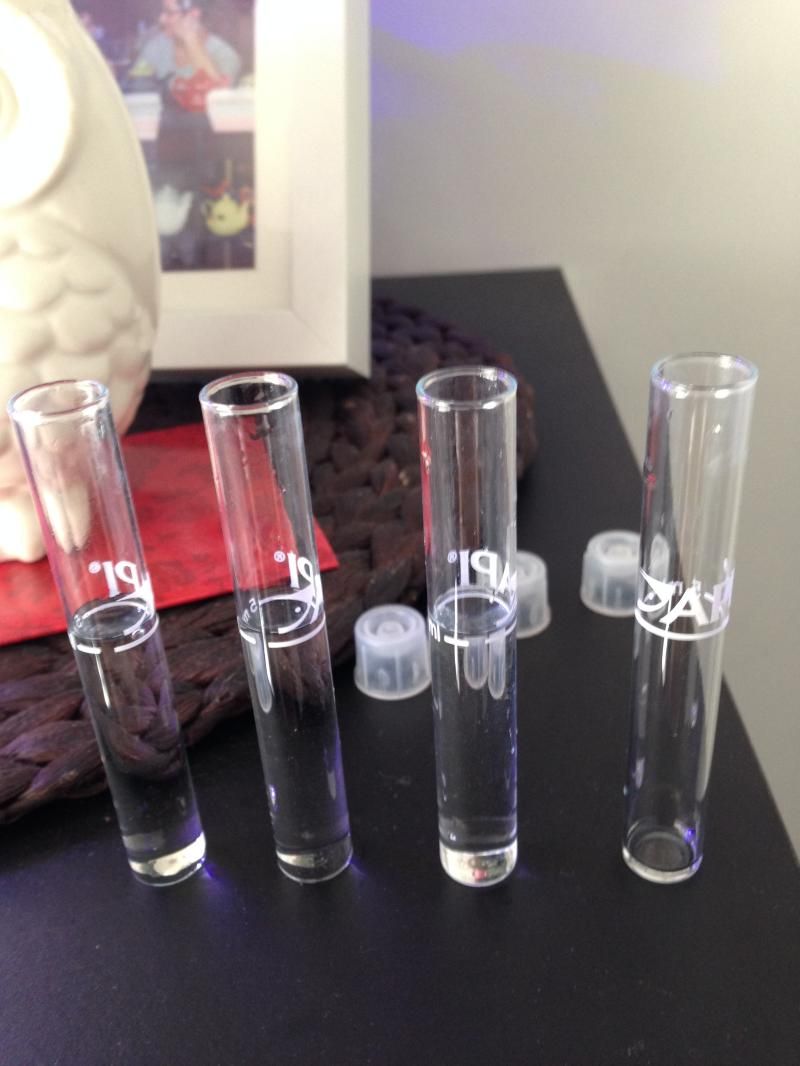
Here we have four tubes. The first three are all undiluted, though of course besides the first one, the middle two are only 2.5ml each.

Step 3: Dilution!

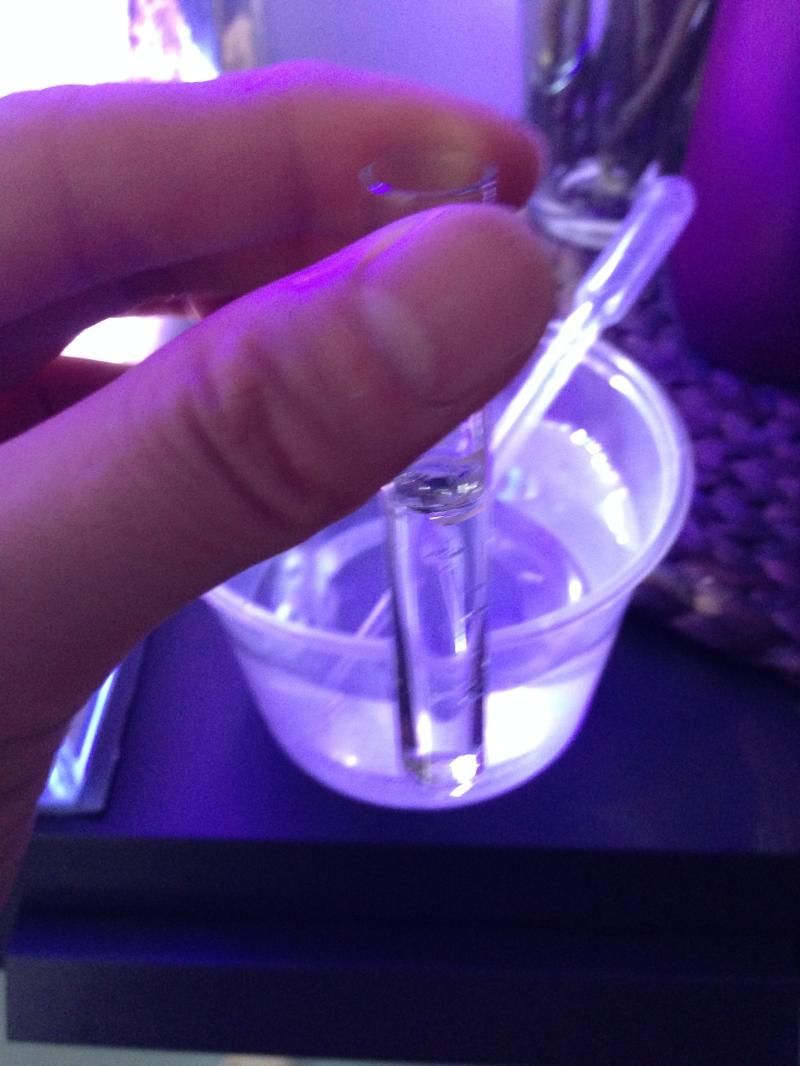
Add 'fresh' water to the tube to dilute it. It doesn't have to be 'fresh' as in 'zero salinity water'. It just must not contain whatever you are trying to measure. In this case it is phosphates.

And this is now 5ml, half with phosphate-free water (or at least unmeasurable) and half with tank water. Dilution? 50%. Or 1/2. Whatever you prefer.

Do that to both the middle containers.

We now have three tubes with 5ml of water. However, only the first one is not diluted. The second and third only contain half the concentration of phosphates compared to the first.

Step 4: Repeat!

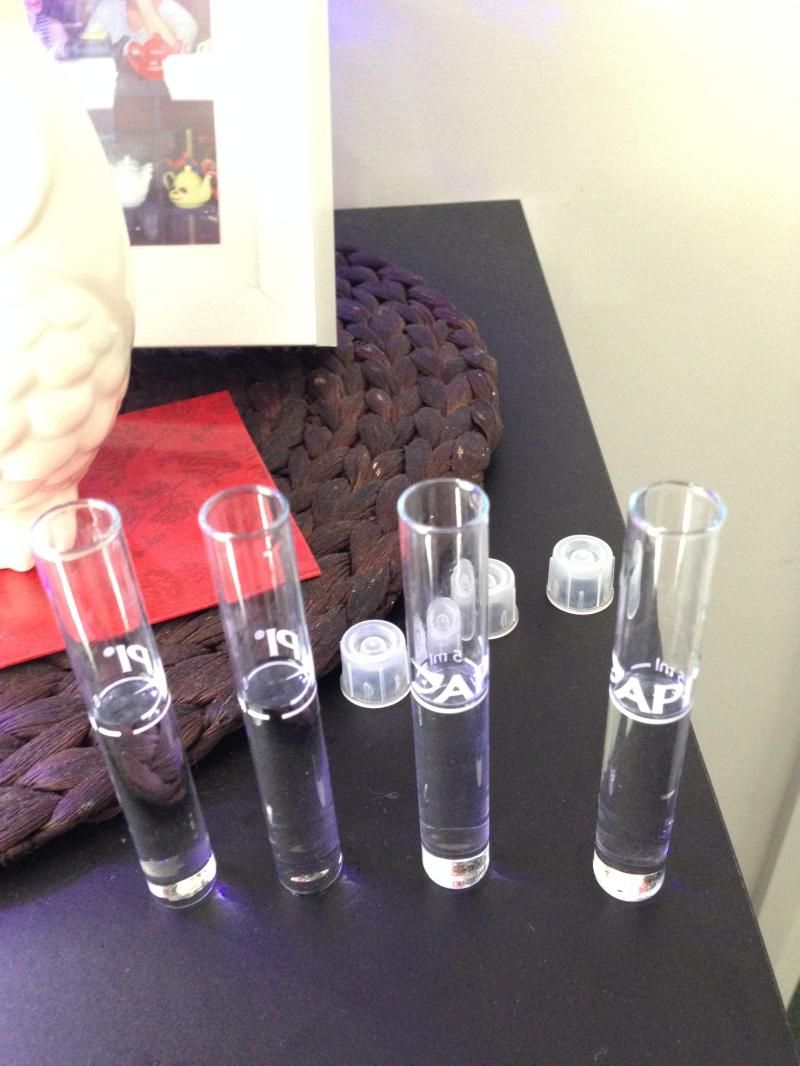
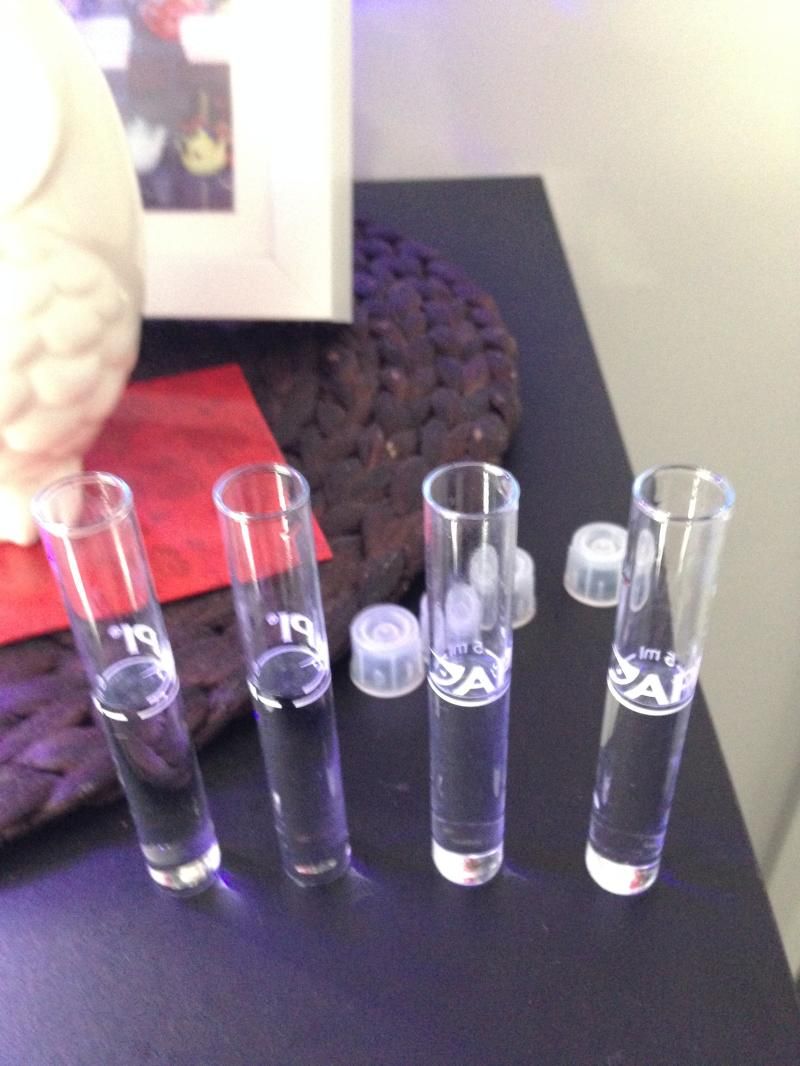
Once again removed 2.5ml from the last tube, and added it to the next. Here, we now have from left to right: 5ml undiluted, 5ml 1/2 diluted, 2.5ml 1/2 diluted, 2.5ml 1/2 diluted.

Filled with phosphate-free water again. They are all 5ml now, though from left to right, it is: undiluted, 1/2 diluted, 1/4 diluted and 1/4 diluted.

Step 5: Last Step!

So Step 4 must be done until you reach the final tube, which depends on how many serial dilutions you want to make. I stopped at 1/8, but one can go on and on.

Anyways, last step is simple. Take out 2.5ml from the last tube and discard it. Then add in 2.5ml of phosphate-free water.

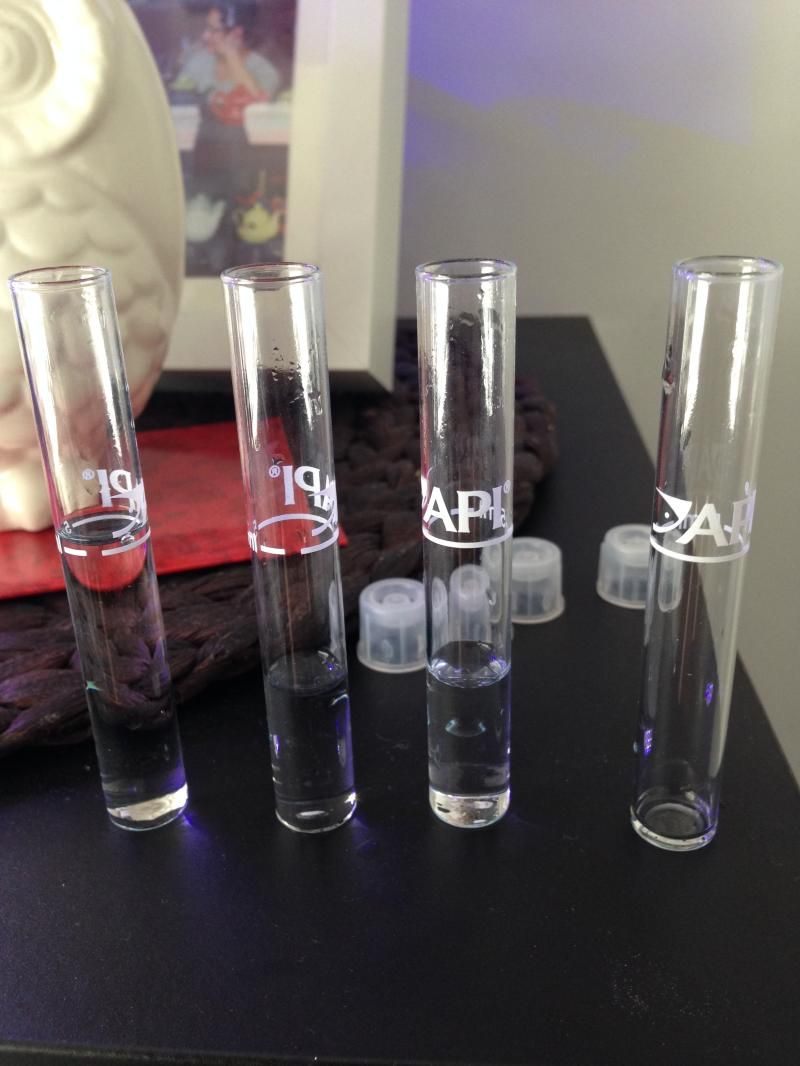
And now, we have from left to right: undiluted, 1/2 diluted, 1/4 diluted and 1/8 diluted.

 Step 6: Test your parameter!

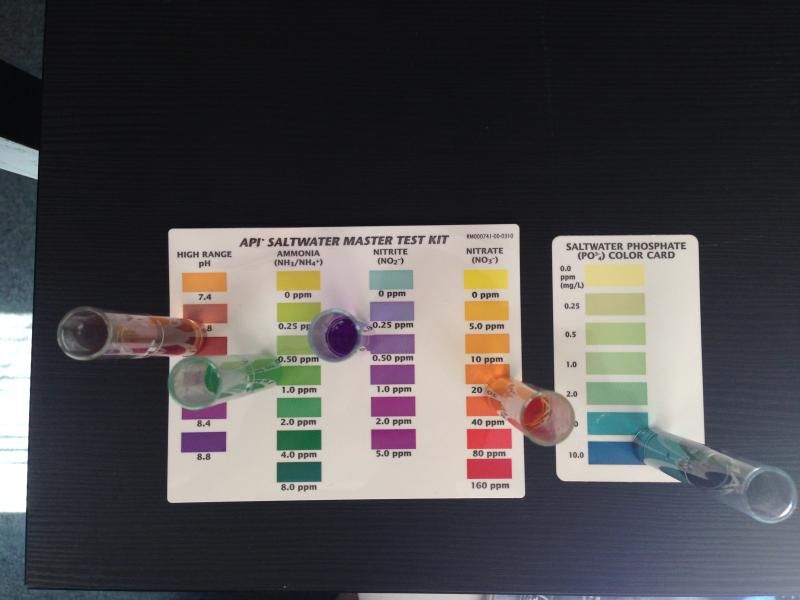
Test results.

So from left to right it is 1/8, 1/4, 1/2 and undiluted. Which makes sense as the farther left, the less phosphate is measured.

So how do we interpret this? Simple. Whatever dilution it is, multiply the result with the denominator.

So we have:
Undiluted: 1x 10 = 10ppm
1/2: 2x 5 = 10ppm
1/4: 4x 2 = 8ppm
1/8: 8x 1 = 8ppm

So the results is actually somewhere between 8 to 10ppm.

Now, I am no way advocating that this is an extremely exact method. There are more dilutions you can attempt to make it more exact, such as by going through sequential integers for denominators. Undiluted, 1/2, 1/3, 1/4, 1/5, etc. for example.

But it is a lot better.

Here, it is found that the results isn't quite 10ppm.

Conclusion

This method (which is actually commonly used in laboratories) is something that can be done to not only determine concentrations initially 'off-the-charts', but also to get a more precise measurement.

Hope it helps!

Friday, January 23, 2015

TJ: Mini-Sea: #4

Aquarium Status

Cycling, Day 6

Tested my water today. Here are the results:

Test results on 24/01/2015, approximately 20 hours after the last addition of pureed seafood mix.

Ammonia: 1ppm
Nitrite: 0.5ppm
Nitrate: 40ppm
Phosphate: 10.0ppm (or more)
pH: 8
kH: 9
Calcium: 620ppm

Ammonia has decreased significantly (as expected), nitrite has risen, but not as much as expected. Could be that there is just some extra nitrite that has yet to be able to be converted into nitrate. Because nitrate has also rose as well. To 40ppm. Phosphate is still 10ppm or more, so still very high.

pH and kH remain stable, calcium is exactly the same as tested on the first day (yesterday's test may be a false reading). If the next few readings of calcium is still the same, I will chalk yesterday's test to human error. Otherwise, it is a bit worrying.

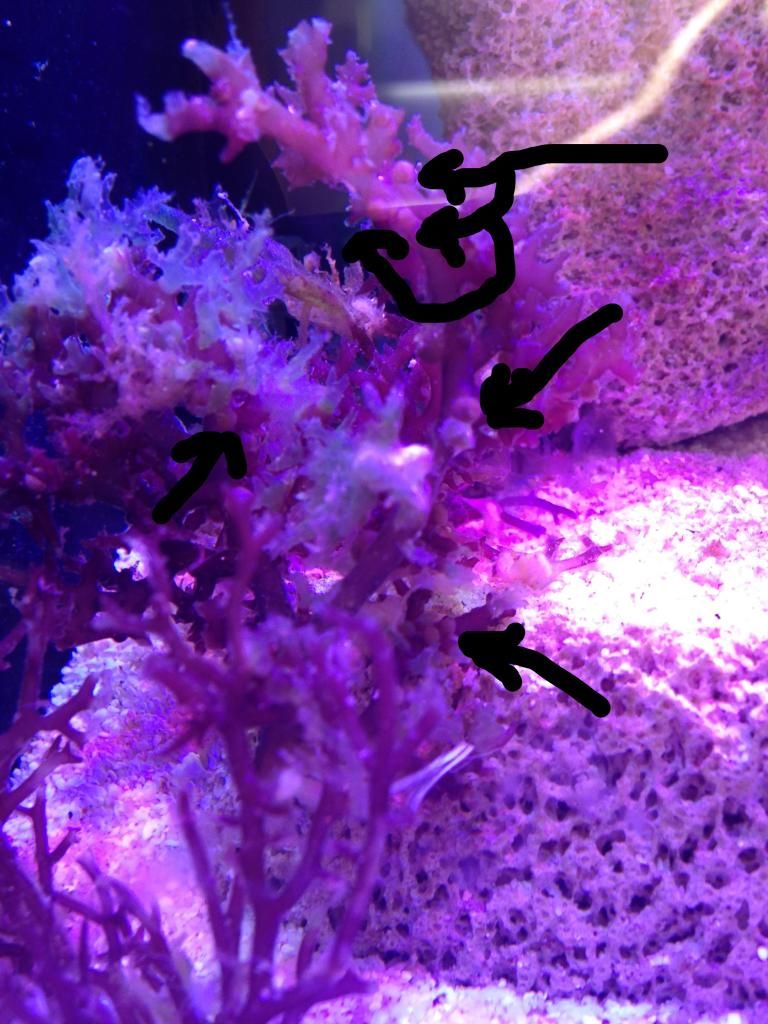
More importantly - or rather, more interestingly, my macroalgae has developed more nodules. Take a look:

 Nodules pointed to in black. Any ideas?


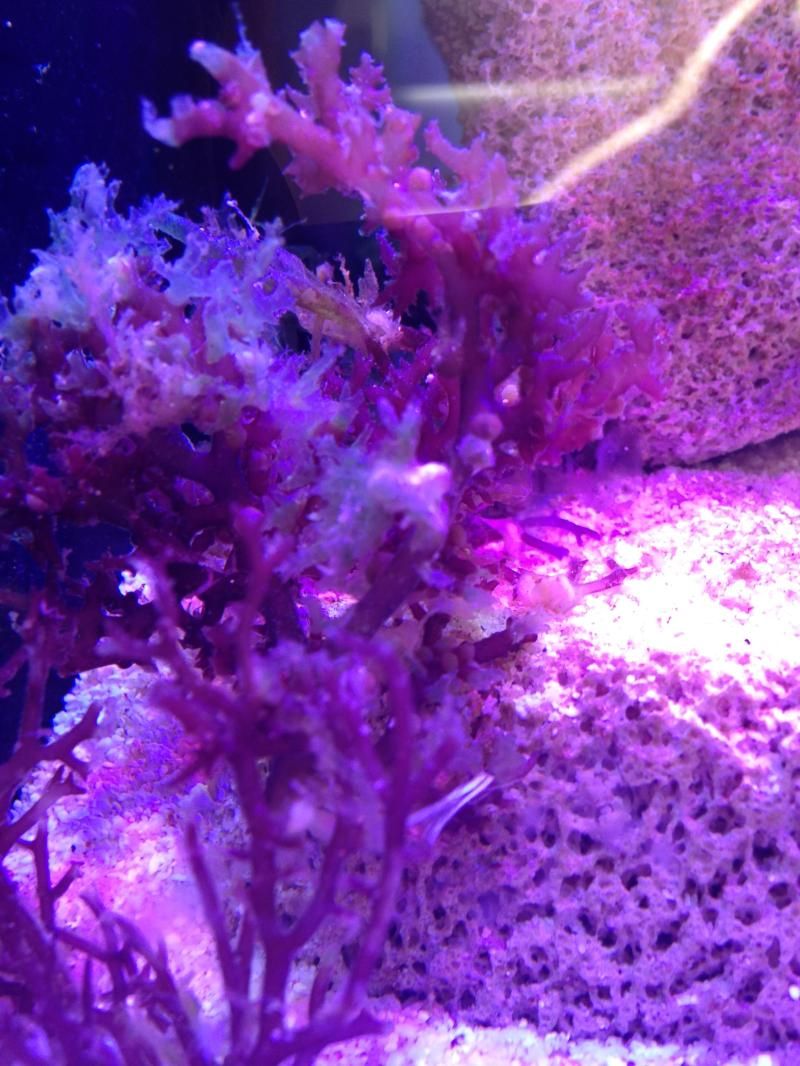
Original photo for comparison/reference.

So yeah, I still have no idea what it could be, except that there's more and more of 'em.

If anyone know with certainty, let me know. I talked to someone yesterday and it could be galls/tumor growths/basically from infection, but still not certain.

TJ: Mini-Sea: #3

Aquarium Status

Cycling, Day 5

Tested my water today. Here are the results:


Test results on 23/01/2015, approximately 9 hours after the last addition of pureed seafood mix.

Ammonia: 4ppm
Nitrite: 0ppm
Nitrate: 5.0ppm
Phosphate: 10.0ppm (or more)
pH: 8.2
kH: 9
Calcium: 500ppm

For some odd reason, calcium has dropped drastically. No idea why, or even if I did the test wrong (I am not too familiar with the API Calcium Test). pH is higher than previously tested by 0.2, whilst kH remained the same.

Ammonia is really high, which I am not surprised about. Both nitrite and nitrate though, are lower than the last time I tested it, after a number of rounds of pureed seafood addition. Phosphate is even higher than before, but given the look of the tank at the moment, I am not surprised. There are food bits floating all over.

In hindsight, I should have pureed the food better. The first time I cycled a tank, the food was pureed really fine, there was absolutely no clogging. This time round, the food particles are still quite large. My bad.

Anyways, this is good and bad. On the one hand, both nitrite and nitrate is lower, despite daily additions of ~15g of pureed seafood. That means that the biological filtration system is being established, as despite all the organic addition, nutrients are being taken care of.

On the other hand, phosphate is increasing... which is worrying. That was the point of the macroalgae. To take up nitrate and phosphate.

Now, two possibilities.

1.) Microbes are outcompeting the macroalgae for nitrates, and so nitrate has became a limiting factor for the macroalgae.
2.) The macroalgae is just half-dead, and so it's just not doing it's job properly.

Of course, it could be both...

Well, this will be something that I just have to keep an eye on.

Talking about the macroalgae, there are some nodular growth on the algae, which wasn't there before.

Anyone know what it is? Tumor growth? Spores? Aliens?

Not sure if it's because the thing is dying, or my water quality is horrid at the moment, or if the light is too bright, or if it just does it because it can but...


The little blobs in the circle. There are two. Kinda hard to see I guess. Any ideas? Because I ain't got any.

Anyways, I'll probably leave my aquarium like that for a bit to see if phosphate do decrease over time. I plan to add a lot more macroalgae anyways, just gotta find them. The second time I went to the beach, it was high tide and unfortunately there was not much. This Monday hopefully, I'll be able to collect more awesome stuff.

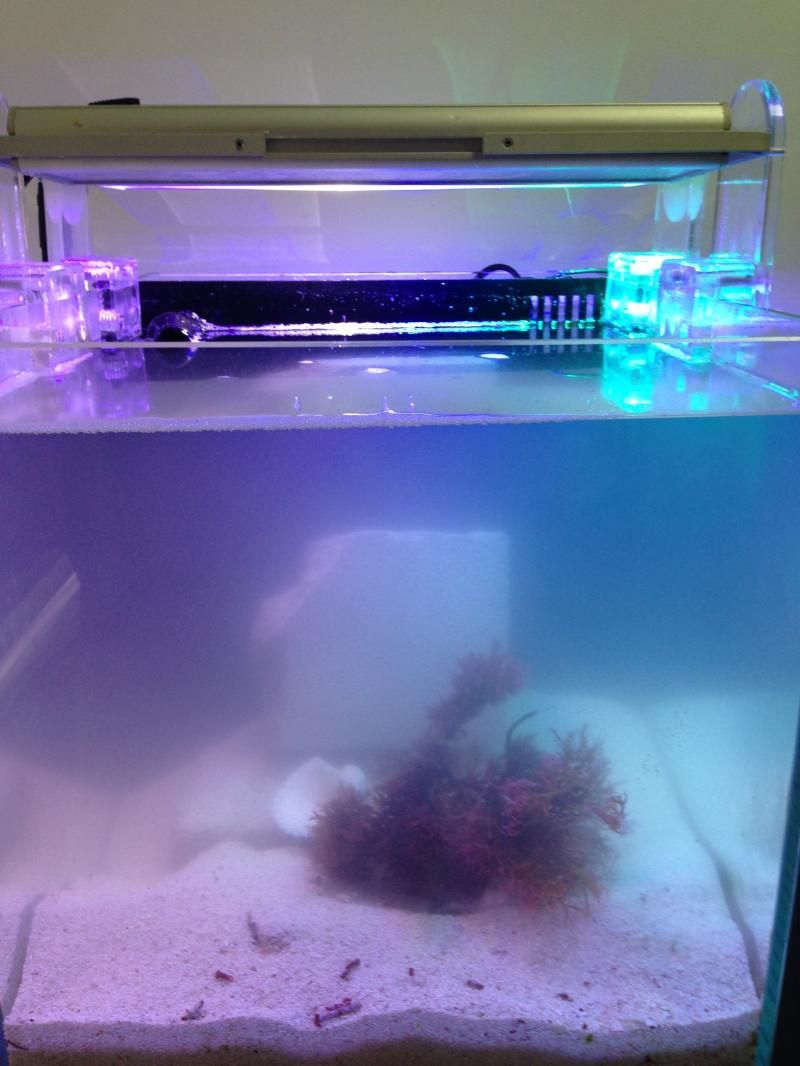
Here's the FTS at the moment:

 So much stuff floating around...

As I mentioned, the macroalgae is half dead. D: Which isn't surprising, considering how I found it washed up on the beach. But still. I was hopeful.

It is breaking apart, though part of it is turning green (you can tell from the picture above). I am pretty sure that's just microalgae growing inside those tubes though.

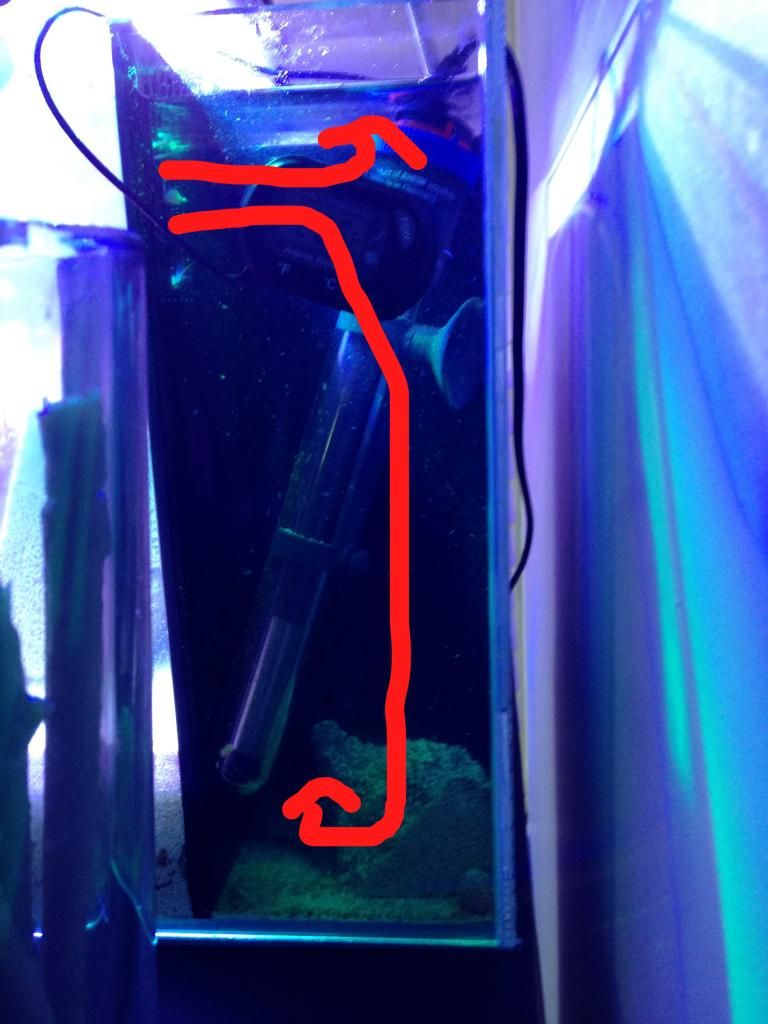
Talking about stuff floating around, thanks to how dirty it became, I actually was able to witness the water flow in the first compartment of my sump.

 A very artistic representation of the water movement.

I have always been worried about how the water flows when it enters the first compartment. Due to the way the baffles were designed, I have to fill up water very close to the top of the tank, but that means that water flows over the baffle, as opposed to underneath it as intended.

I have always been worried that therefore the area below would be stagnant, but I was wrong! :D

I noticed today that whilst some water flowed over the top, much of it did flow downwards and into the second compartment, as per designed! Awesome. :D