Saturday, January 3, 2015

A Guide to Reef Aquariums

Introduction

A reef aquarium is generally seen as the 'final' step on a aquarium hobbyist's journey, given its complexity, compared to a freshwater setup. A reef is a delicate balance of living organisms, each feeling a niche that is necessary for the survival of the reef. From the corals that make up the bulk of the reef, whose skeleton are the building blocks of the reef itself, to the dinoflagellates living those corals, providing valuable sustenance. There are carnivores and herbivores, keeping other populations of organisms in check. There are detrivores, cycling through dead matter. There are bio-eroders, boring over and through the reef rocks, releasing valuable compounds into the water column.

A coral reef plays host to countless numbers of species of micro- and macro-organisms. How many can you spot here? Photo from The Telegraph.

The reef is also said to be the place with the most amount of mutualistic and commensalistic relationships, far surpassing forests and the likes. From anemonefish and their host anemones, to sponges and all the various shrimps and critters living inside them, to of course the aforementioned corals and zooxanthellae. There are cleaner fish that can safely swim into the mouth of ferocious sharks. There are algae that lives inside slugs, converting sunlight into energy for the molluscs. There are hermit crabs that attach anemones to their shells for protection.
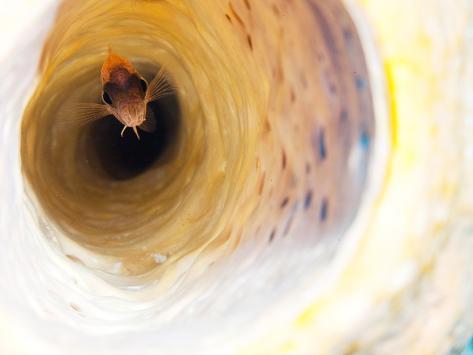
Peek-a-boo! Were you expecting me inside this sponge? Picture by Ben Horton, from AllPosters.com.

And there are giant whales 30 meters long, yet probably can't eat you even if they tried to. There are sharks as peaceful as these whales, and whales that are meaner than sharks. There are jellyfish that reverts to their younger self to avoid death by old age, and lobsters are known to not 'age'. Tunicates start out with a nervous system, but decide to forgo all intelligence as adults. Portuguese Man-o-Wars are not one, but multiple organisms, each specializing in something different. Green turtles can swim beyond 50 kilometers an hour, as fast as your car in normal traffic.

There are fish that looks like stones, rocks, corals, algae, kelp, detritus, and everything in between. There are prey that mimick predators, and predators that mimick prey.

And that's just a very small number of examples of the diversity of life in the sea.

This is a sponge. Yes. Seriously. It is a sponge. Oh also it is carnivorous. Chondrocladia lyra. Credit: MBARI.

With all that, it is no wonder that we are so interested in setting up reef systems. Who wouldn't want to see all these amazing organisms and their interactions first hand, in their own home?

However, interest is one thing, and understanding is another. Precisely because of the complexities of a reef that we want to mimick, it is necessary to take a step back and realize the full scope of what we want to attempt.

This article is no where near comprehensive enough to cover all topics required, but is a good starting point to step back, think and consider (or reconsider) a reef aquarium and what it represents and requires.

A Reef Aquarium

A reef aquarium is by definition, an aquarium that replicates the compositions of that of a reef. However, it is unfortunate that we tend to direct our attention to corals (and fish), and leave it at that.

This, from the start, will cause problems. By focusing too much on just a few types of organisms, we forget that everything else is a natural part of a reef too. From shrimps to crabs to starfish to sea urchins to bristleworms to snails to clams to nudibranchs to sponges to hydroids to algae to tunicates to everything in between. All these make up a natural reef ecosystem.

The focus on corals is not wrong - after all, a 'reef' can't be called a 'reef' without corals (although a marine ecosystem does not necessary need to include corals). However, again, the over-focus is an issue. Let not forget for a second all the interactions mentioned above. One in particular interaction springs to mind, and that is the mutualistic relationship between zooxanthellae and corals. Zooxanthellae are a type of algae, specifically of the phylum dinoflagellata (dinoflagellates).

If you have been keeping reef aquariums for a while - or have done research on them, you'd know that 'dinoflagellates' is referred to commonly as a pest algae. So how can it be, that something is both a pest and an essential component of our reef systems? Well simply put, there are many, many, many species of dinoflagellates. Some are harmful and others are not.

The point of consideration though, is that dinoflagellates, as algae, thrive under very similar conditions - and so something growing zooxanthellae can also grow the unwanted species of dinoflagellates. I say here 'unwanted', as it is quite obvious that there is nowhere near as much growth of 'unwanted' dinoflagellates in the wild, as there is in our aquariums.

The truth about this is that 'unwanted' dinoflagellates are just part of the complex food web in the wild, in which it is preyed upon by many organisms.

This, is how the ecosystem is always kept in check. Organisms are constantly eating and being eaten, out-competing and being out-competed, living and dying and growing and shrinking and so on. This keep things in 'balance', and 'balance' here is used quite liberally. In truth there is no such thing as a complete balance in the wild. Species composition change all the time within an area, as species go extinct or evolve, migrate in or migrate out. Regardless of what species it is though, the important thing is that all niches are filled.

Of course, we can not hope to at all easily replicate this at all in our home aquariums. The first and foremost issue is that we can not hope to at all easily source organisms to fill in all the niches. Many 'pests' are actually important parts of the ecosystem. Algae provides sustenance for many types of fish, whilst predators of corals make way for new additions to the system. Much like trees in a forest, corals are considered the crux of it all, and much like how a tree dying (and falling over) results in space opening up, a dead coral may leave behind a skeleton, that will become the backbone of something new. However, many interactions are highly specific, and many types of algae are only fed upon by certain species of organisms, be it through preference, or due to specific chemical defenses. Either way, combined with the limitation of space, there is no hope to ever be able to fully replicate the conditions of a reef.

Many times our aquariums are only overran by pests, simply because there is nothing feeding on said pests. Space plays an important role, as even if the natural predator of said pest existed before, if the pest existed in low enough numbers, the predators could have died out long before.

This also plays a role in recovery as well. Marine angelfish commonly feed on corals, which makes them a hazard in reef aquariums. In the wild though, they seem to be all over reefs - so why have these reefs not been decimated yet?

The answer here, as with many other things, is moderation. In general, in nature except for perhaps one or two basal organisms, everything else exists in moderation. The fact that everything seems to be eaten by something else means that their numbers are always in check. This is without a doubt not the case in a reef aquarium. We often see bloom of organisms that sometimes just suddenly disappear, but sometimes also take over completely. In a similar way to cattle farming, where cattle moves from one area to the next to allow a desolated area to recover, predators would move from one area of excess numbers of prey to another. When given a choice between an area that is desolated (but may still have some prey left), and another with much easier access to prey, the latter is preferred.

In our aquariums, an angelfish could easily feed on all corals, before they have a chance to regrow. Given that it is a closed system, without any other 'areas' around, the angelfish would just keep wandering around the same area, picking at corals until they are all gone. In the wild, it doesn't matter so much - as when one coral dies, plenty more is growing elsewhere.

So not only are we not going to be able to easily have the full complement of organisms necessarily to cover all niches, but the lack of space means that things can go out of flux much easier. Eventually some of the 'balances' of nature do appear, especially for larger tanks, but it does take time.

We have to admit that therefore, we are not going to be able to fully stimulate reef environments, not easily. For the most part, whatever we do will be very artificial, and much of the niches and occurrences on the reef will have to be supplemented by us - via dosing, equipments or other products.

Imagine as if we have a cake that is multi-colored and multi-flavoured, each area of the cake tasting different, thanks to the many ingredients within.

Not only can we sample just a small slice of it, we are removing a number of ingredients out of that slice - and it may just not taste well at all, as is. We have to either remove further ingredients, or add others to have it taste good.

Limited by size - a small aquarium means some live stock are just impossible to keep.

It is the same with reef aquariums. What we have there will not just be a small slice of nature, but a drastically altered version of it. The best way to handle a reef aquarium, at least at the very beginning, is to choose a very specific aspect of the reef, and play around with it. This also means that is fine to majorly hate something, but remember that none of it is inherently good or bad. All organisms are creations of nature, and beauty is in the eye of the beholder.

Knowing Your Reef Aquarium Requirements

Now that we understand the complexities of a reef, and the difficulties associated, the first thing to remember is - don't panic. If we can only enjoy a slice of cake, then let's just enjoy that slice of cake.

That doesn't mean it has to be a small slice of life - though obviously a larger slice will require more work, and that is where it is all at. Imagine as if all these live stock are cities, and each way they interact are the many roads, connecting them.

The thing is that they, in the wild, have many roads connecting to cities. Therefore, if we want to keep these live stock - we just have to do one oef two things, much like my idea with the slices of cakes and ingredients. We either add the other cities in to have the roads lead somewhere, or... cut it off.

That's essentially how we have to work here. So long as we can take care of all these odds and ends, then there is hope for an amazing replication.

A reef aquarium at Majestic Aquariums. This aquarium is many a reefer's dream, a balance that has been achieved through advanced equipment and reef-keeping techniques.

So how do we do that? Well, through the deep understanding of each and every organism we add, and its requirements - both for growth and control. Pest algae for example, are controlled in the wild through various means - usually through predation.

Whilst algae-predator interactions in the wild may be highly specific, in the aquarium our live stock may learn to expand its preferences.

 Pictured and a number of Hippo Tangs and one Clown Tang, from the same aquarium at Majestic Aquariums. Tangs are known to be good algae-eaters.

Corals are also known for allelopathy, or basically chemical warfare. This is done by corals in the wild, and is effective when there are high concentrations of corals. In many cases though, the currents are enough to drive the toxic biochemicals away, before much harm is done. In our aquarium though, with the limited space, the biochemicals can quickly build up (with results that just isn't pretty). In this case, something like carbon is necessary to sequester those toxins.

These are just two examples of necessary steps that we may need to take. Of course, this is not to say that the above solutions are the only solutions. What matters is that you find the solutions that work best for your aquarium.

Much of this will come down to trying to minimize the amount of work or additions that needs to be done just as a response to a loose-end. For example, don't just add a Tang into your tank to control algae, if it is going to be aggressive towards your other fish or if your tank will be overstocked. That would just be more trouble than it is worth. There are other methods, such as for example, setting up a refugium with chaeto, or maybe even just manually removing algae. Perhaps, your tank is simply missing some Clean-Up Crew such as snails.

Setting Up Your Reef Aquarium

Knowing your reef aquarium requirements will allow for knowing the best way to set up your aquarium.

There are essentially two starting points out there - either start with a planned stocklist and organize your setup around that, or choose your setup and fit your stock to the setup.

Each is just as important as the other, and you have to decide what is more important to you, for your specific next tank. Usually though, the choice will boil down to a compromise between the two - of course there will always be limits to your tank sizes and equipment, and not everything you want to keep, well, you can actually keep easily.

Usually though, the choices boil down to tank size first, then potential stock, then the rest of the equipment. But let's have a look at the general tank sizes, and its effect on the stock you can keep.

Pico Aquariums - are the smallest of aquariums, being any aquarium less than 5 gallons in volume. These are not suitable for most fish, and tend to be geared towards invertebrates. Corals and anemones are possible, but will be heavily dependent on species. Pico aquariums are though, considered hard to keep as the fluctuations in parameters can be immense. The bright side is that the equipment required can be minimal.

Nano Aquariums - are larger aquariums, generally considered to be within the 5-50 gallon range, these aquariums are much better suited to keeping fish, although it is still species dependent. Even then, the number of fish that can be kept still is not a whole lot, so be wary of that. Medium-sized anemones are possible (such as Bubble-Tip Anemones) and most corals will do fine. These are considered a good starting point - not too small that parameters swing too wildly, but not too large that the amount of equipment required is daunting.

Medium-Sized Aquariums - are around 50-150 gallons in range, these aquariums can host a lot more fish, and more variety of fish too. Most anemones and corals will do just fine here, but still need to be species-specific.Here, equipments such as reactors, skimmers or various other products are starting to be deemed a requirement.

Large Aquariums - around the 150-650 gallons range, these are what most reef aquarists gravitate to eventually. But these take effort to maintain. Though once established, these tanks can look amazing. These also have the size required to afford much of the biodiversity the smaller sizes cannot cope with.

Extra-Large Aquariums - basically above 650 gallons. These are amazing to watch, and can house certain fish (like sharks) that most can only dream of keeping. Equipments required are a nightmare, but it is worth it. These require a lot of research and experience to establish.

There are some 'special consideration' aquariums that have to be mentioned, regardless of their volume. These are:

Shallow Reef Aquariums - aquariums that are considered to be much shorter than they are wide/long. These are a popular aquarium type, as the short height means that light diffusion is not too different between the highest and lowest submersion points. This means that lighting options are a lot more varied, as there is a larger amount of lights that can work over these type of aquarium. After all, it may not matter too much if they can punch deep into the water, or not so much. These type of aquarium also has the advantage of allowing viewing from above, which can be extremely satisfying. Corals, for example, in general love to be exposed to light as much as possible and therefore would prefer to stand upright, facing the light above. However, for the most part we view aquariums from the side, and so may not see the prettiest side of the coral. On the other hand, placing corals so that it faces sideways means that we can see it, but it may not be receiving as much light as it prefers. shallow reefs solve that.

Tall Aquariums - the reverse of shallow reefs, tall aquariums are designed to be taller in relation to their width/length. These tend to be for live stock that requires specific requirements, such as angelfish - animals that require a tall column of water for breeding purposes. Alternatively, it is for those who want to see the diffusion of light over the varying depths, keeping different types of organisms suited to each condition at each depth. There are, for example, non-photosynthetic coral that prefer low or no light. On the other hand, there are corals such as Acropora species that prefer high light. These type of tank provides variety.

The above is just a brief guide to the different types of aquariums out there, for your consideration as to what best fits your available space, and preference in live stock. Of course, each and every species is unique, and you need to research the requirements of each before each addition, and to see if you can handle the complexities associated with each.

Remember what I wrote above - each organism is a city - and each city has its own connections. Do you have all the connections required? Just because you have two fish and someone else have two fish as well for example, doesn't mean the work cut out for you both is the same.

Mandarin Dragonets for example, generally only feed on copepods. If you are not able to get them to feed on anything else, you need to supply copepods (another city), and they must come from somewhere, and require different nutrition, and requires proper living quarters and so on (so many more roads to other cities). You can cut away the need for all those cities by simply buying and adding them to your aquarium, but of course that will then be part of your maintenance and care schedule. If you decide to at the same time add something like a lionfish (let just assume for a moment that Mandarin Dragonets and lionfish can coexist), the lionfish may only eat a particular type of food - such as live feeder fish. That's something else you need to supply, and something else you need to worry about. So even if you have only those two fish, it could be a big hassle. Especially since in this case, you have to constantly source live food.

On the other hand, someone else might simply be keeping a Clownfish and a Dottyback. They can be generally easily reared to take processed food, and so are quite simple to feed.

So just in terms of feeding, it could be vastly different.

Imagine everything else - taking care of waste, territories, behaviours and more.

Some fish love to dig in the sand repeatedly, burying corals near the ground - something you have to think of.

Others eat algae off the rocks and tend to scrape bits and pieces of debris off the rocks, and you have to deal with that constant bio-erosion.

The simple rule of thumb is this - be ready for what your live stock require. So long as that is the case, you will find that your problems will be much fewer.

Livestock Requirements (Or 'What Equipments Do I Need?')

When you have chosen the tank size you'd want, there is a number of things to consider, in the following order:
1.) What type of filtration setup do you want? A sump? An external filter? Or an internal filter?
1.a.) If a sump, are you looking for an attached sump or a separate sump?
1.b.) If an external filter, are you looking for a canister or a hang-on-the-back?
2.) What sort of aquascape are you looking to create?
3.) What sort of filtration will be necessary to handle the bioload and scape you have in mind?
4.) What sort of supplements are required?

These steps will help you broadly envision what you need. Let's look at the specifics.

1.) Type of Filtration

Regardless of the filtration of preference, they all work based on one principle: tank water is drawn through an inlet through various filter media which 'cleanses' the water, and then out the outlet.

This is true no matter what. And that also means that you may have a number of filtrative sytems in place at once.

In a marine system, the display itself is one system (unless you are going for minimal sand/rock). This is because the rock and sand you have in your display will itself act as filters, with benefical microbes living within to deal with waste products and anything else floating around. A good system will have plenty of microbes in the water itself, so that any dead matter in the aquarium will be quickly decomposed.

Then there is whatever system we decide to add. The types of filtration setups are diverse, but are broken down into broad categories as above.

An internal filter is one of the more 'basic' forms of filtration, though generally not enough for a marine tank as it is regarded as not having the adequate filtration media required. Sumps are the preferred method, as it can generally house plenty of media - at the same time being much more accessible.

The importance of putting this step first, is that on top of the tank itself, we need to determine if all the filtrative equipment will fit. There is no point to planning for a sump, if there is not enough space for plumbing for example.

2.) The Aquascape

Why the aquascape as the next step? Simple. This is because once we have established the necessary basics, the next part is determining the final 'look' that we want in the display. From there, we can determine what extras are necessary.

Some people will have enough rock and sand in the display to act as their main biological filtration system. However, when this is not the case, then it is absolutely necessary to rely on the other filtration system(s) you have set up.

This is why it is necessary to know your intended final display first, before anything else.

3.) Filtration Media

Your choice of filtration media is important, to handle whatever you are planning to keep. In essence, it is quite simple. So long as your filtration system can handle whatever you throw at it, you are sweet! But what you throw at it may not be just simply PANN (phosphate, ammonia, nitrite and/or nitrate) but also toxins and various biochemicals. And inorganic molecules whilst we are at it. An example is for example, when you have bio-eroders and whatever is in your rocks for example, is released, which can include calcium carbonate and many other substances.

Of the different filtration media, one can broadly divide them into three categories - mechanical, biological and chemical filtration media.

Mechanical filtration media are anything that physically stop particles, preventing them from flowing back into the tank. Micron socks are common, as the sizes available allows for the filtration of very small particles.
-Advantages: Easy to use, easy to replace, can be replenished, removes large particles.
-Disadvantages: Can clog up easily, does not filter minute particles (such as PANN).

Biological filtration media are well, organisms (and its housing). So this include things like artificial products such as Marine Pure, chaeto, live rock and so on. Essentially, you are relying on the power of biology to break down biology.
-Advantages: Can be highly effective (as there are almost always something to break down/sequester something), does not need replenishment, can be a form of nutrient export, can be highly effective, does not require electricity to run (in and of itself).
-Disadvantages: Can die, can grow more than preferred.

Chemical filtration media relies on the power of chemistry. The chemicals inside the media reacts with chemicals in the water, removing them. An example is activated carbon.
-Advantages: Can be highly effective in removing what it is intended to remove.
-Disadvantages: Cannot be replenished (easily), can be used up without knowing, can release 'captured' chemicals into the water.

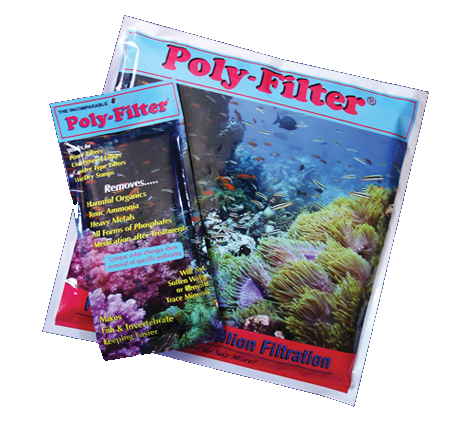
As you can see, each and every media has their own advantages and disadvantages. There are various products that acts as multiple media at once. For example, many biological filtration media (live rock, Marine Pure, etc.) can also be regarded as mechanical filtration media (obviously, as it can trap particles). Poly-Filter is a common chemical filtration medium, but also acts as a mechanical filtration medium. In these cases, the filtration media will have both the advantages and disadvantages of the filtration type it is (though some cancel each other out).

It is best to decide on the filtration media you need based on how few you can get away with. The more filtration media (and equipment) you have, the more potential for something to go wrong.

Of course, that also doesn't mean that you can skimp no the essentials. If it is needed, then it is needed.

So what equipments do you need? Some suggest refugiums. Other say skimmers are a must. Then there are those that swear by Marine Pure. Others see activated carbon as a must have. In the end, it doesn't matter. They can all work, whether for a specific purpose, or to generally lower PANN.

Either way, so long as you have all your bases covered, then you are fine. For example, some people rely solely on a combination of a bacterial grower such as Marine Pure or Matrix in combination with chaeto or gracilaria to reduce PANN, and it works. Others perhaps rely more so on dosing LaCl to reduce phosphates.

Regardless of the method, so long as your maintenance and care schedule includes all the necessary products and techniques, then you are fine. Remember though, the keyword is moderation. For example, in the end your live stock such as corals do need phosphates and nitrates to survive (well, the zooxanthellae do). If you somehow many to skim too much out of the water, then your corals will not be happy.

But that leads into:

4.) Supplements

What does your aquarium need to thrive? An aquarium is after all, not a painting to be gawked at simply. We need to constantly maintain it, and that includes all the critters in there, from bacteria to corals to fish.

Determine early on what types of chemicals are necessary for each type of live stock you have. Will your coral need calcium supplements? What type of food will your fish need? Does anything need magnesium? Iodide? Amino acids? Plankton? Brine shrimp?

Make sure you know the requirements of each organism you want to keep, and decide on how to supplement it.

Sometimes this may be through reactors, or dosing pumps.

Either way, that will be extra equipment you need to add to the setup.

One special mention is lights. Lights are also a 'supplement' for various photosynthetic organisms, and many require specific types of lighting. Think about that when choosing your equipments.

Knowing what equipments you will need will ensure that you can plan ahead, in terms of where to place all the equipments, and whether or not they will actually all fit. If they don't... well, you then will need to think about alternatives. Bigger aquarium? Bigger sump? Etc. etc.

This is also why I prefer to go for the minimal you need for your aquarium to thrive. You don't want to waste space, money and time on things you don't need.

Setting Up Your Equipments

Next up is knowing when to set up each piece of equipment. It isn't quite as straightforward as 'putting them all in'. Some requires time to 'establish', whilst there are those that will hamper the establishment of others.

For example, biological filtration media such as your rocks, sand and so on are simply housing, and so you actually need to build up microbial populations within. To do that, one needs to provide organics - but that can be taken away by a skimmer, and so running a skimmer whilst you are establishing your microbial colonies is a big no-no.

In general, the steps are as follows:
-Establish microbes.
-Establish skimmer.
-Establish reactors.
-Establish dosing pumps.
-Everything else.

It will still depend on your particular piece of equipment though. Just remember this - there is really no need to bring it online early, if it is not going to do anything. Bring it online when it is not going to hamper anything else, and when it is time to be established.

The first step in the list above is what most would refer to as the 'cycle', or preferably, the 'bacteria/microbe propagation phase' or 'BPP/MPP' for short.

To test that your aquarium's filtration is up to par, try 'ghostfeeding' your aquarium, or essentially 'feeding as if there is something there, but there isn't'. This way, you can test how well your aquarium deals with the potential bioload of your fish (which comes from the food you feed).

Stock the Aquarium!

By now, your aquarium should be ready for the planned live stock. Be it corals or anemones or shrimps or clams or fish or crabs or nudibranches or algae or turtles or whatever it is you have planned for, you should, by now, prepared the necessary equipments and have it all set up. And so by now, it should all be ready!

(Of course, how to stock your live stock is an entirely different story).

Conclusion

 This is a short guide to provide the basics of what makes a reef aquarium a reef aquarium. The long-story-short is that you need to decide on your live stock beforehand, set up your aquarium geared towards keeping them, understanding all that is required for that process (including any 'loose ends' you need to tie up), set it all up in order, and once everything is ready (and you have tested that it is ready), have fun!

Saturday, December 27, 2014

Flight or Fight?

Introduction

It is always of interest to hobbyist to understand the behaviour of the organisms we raise, to best take care of them.

Fish behaviour though, is definitely extremely complex, something that cannot simply be categorized or idealized. Behavioural ecologists have spent countless years understanding the complex relationships between various factors that make up an organism, and how that dictates how it deals with the surroundings.

As we all know, some fish displays aggressive behaviour towards any of its conspecifics. Others, only to the same sexes. Then there are those that besides a 'mate', will definitely take on anything else.

There are fish that will not tolerate any coinhabitants, and those that will easily. There are those 'in-between' as well. Sometimes, it seems like it all just varies with each specific individual.

Whilst certainly the combination of behavioural factors is part of what makes each and every species unique, and then every individual amongst that species, there are certain behaviours that we can observe as being consistent throughout many species. By understanding these behaviours firstly, and relationships between these behaviours secondly, we can definitely have a more profound understanding of our live stock.

Fight or Flight

The 'fight or flight' response is one that is deeply ingrained in many animals, one that trascends the various animal kingdoms.

'Fight or flight' denotes a very simple biological decision, that of whether to run from a dangerous situation, or deal with it head on. Whilst this is generally most obvious in fish, you would probably have stumbled upon it elsewhere.

Did you ever notice that many clams would close up quickly if you shadow the lights? It is a response to danger, or at least 'perceived' danger. In the wild, they associate being shadowed with the presence of something above, shading the Sun. This something 'above' could very well be a predator, hence the closing up 'flight' response.

'Fight' and 'Flight'?

As we can see above, the definition of 'fight' and 'flight' can be quite broad. 'Flight' doesn't mean that one has to definitely run away. It could be something like the clam's 'closing up', or a coral retracting its tentacles into itself. Neither of this allows the organism to go anywhere far, but it is enough to escape from a predator.

'Fight' too, does not necessarily mean 'fight' in the sense of a battle ensuing. A 'fight' response can simply involve the act of rasing one's defenses, such as a pufferfish puffing up, or a lionfish raising its spines. Essentially, if 'flight' is an act of escape, 'fight' is an act of defiance.

It is important to understand the definition of these words, to fully understand why our livestock do what they do. Or at least, provide some explanation for it.

A Perceived Threat

One of the factors that we have to keep in mind is that a 'threat' may be perceived, i.e. non-existent.

However, due to the way organisms are programmed, they may still react nonetheless - for example, with the clams and shadowing example above.

Why is this important? We must remember then that what we know or perceive is not as important as what our live stock know or perceive.

One of the most obvious example of this is with cichlids. Many cichlids fall prey to birds and the likes. Birds rely mainly on sight to spot their prey, and in areas of open water, they can obviously spot their prey better.

Cichlids, therefore, avoid open areas like the plague, unless there is indication otherwise. Over time, they will eventually 'brave the outdoors', though it will take time for them to do so. Even then, their fight or flight response kicks in, if there is any semblance of danger, such as when you approach. Though in this case, it will almost always be a 'flight' response. This is because everything boils down to survival (and passing down of their genes), and in situations where they have little chance to fight back, their instinctive response is to run away.

So what can you do? You can turn off their 'fight or flight' response by adding what are called dithers, or in other words fish that acts as a safety indication. There are many open water fish that will brave the open in large numbers, such as rainbowfish. With these in the aquarium, it will give the cichlid a sense of safety. If these fish are not being eaten, then a likelihood of predators is low.

A True Threat

Understanding the 'fight or flight' response is also important to understand many of the interactions between our livestock.

When dealing with predators or major dangers, the instinct is to run away. When dealing with a much more managable danger, such as competition, then the instinct gears more towards te 'fight' response. Fight for mates, fight for food, fight for territory.

Many of this will still depend on the situation, but others will be almost exclusively a 'fight' response, when the 'flight' response is unavailable.

How is this important, and what does this explain? This explains a lot. Have you ever seen a cichlid defend its young? For many cichlids, the young are defenseless and are totally reliant on the parents. In such cases, leaving the young means certain death, and so even if possible, cichlid parents may not leave their youngs, in order to protect them. When the 'flight' response is forced to be switched off, the 'fight' response tends to be much more intense as well.

This is why many fish are so much more aggressive during and after breeding.

This is the same for territorial aggression. Having chosen a home, they have nowhere else to flee to, and so will do anything to protect it. Well in the wild, they can abandon their home, but...

In Our Aquarium

Our aquarium is quite special because we put fish together into a box that is probably at least a thousand times smaller than their natural habitat. At least. At least.

So don't be surprised if there is a lot of territorial encroachment, or if there is a lot of 'fight' responses going on. It is easy for a fish to be cornered, and obviously when cornered - the 'flight' choice is gone. And so, fight.

One major is issue is... what happens if both 'fight' and 'flight' are unavailable options? Have you ever seen your fish tucked away in the corner of your aquarium, afraid of coming out? Yeah...

So how do we control this.

Simple. We just have to make it so that the fish don't need to choose between 'fight' or 'flight'.

Okay, it is not as simple as that.

Think back to the example above. Most cases result from a fish addition into a tank with a fish that already has a territory. The fish feels like it needs to protect it, and will chase away the invader (the new fish). On the other hand, in nature, the invader might just run away, but in our aquariums, they will still be somewhere around. Having not manage to chase away the invader, the defender just have to try, and try, and try again. Even when the 'invader' is tucked in the corner. So next time, don't blame that 'aggressive' fish of yours. It is just protecting its territory, and is probably just as scared.

There are many methods that can work, but usually 'resetting' the aquascape will help. When this happens, no one has territories, and so everyone has to establish something. In this case, it might just work out as fish do not actually require that big of a territory. The issue normally is that once established, a territory keeps on getting bigger and bigger, until it meets the edge of another where it stops. So multiple territories established at once will work, but sequential additions mean that something will encroach upon something else's territory, and whilst fish are happy to have a limited territory from the beginning, they do not like a big territory being narrowed down.

The above is just one issue that arises from the 'fight or flight' response. There are many others, such as issues with fish running into rocks and the likes and hurting themselves out of fright. All of this must be managed, by reducing the need for the fish to resort to the 'fight or flight' reaponse.

Because when they need to initiate that response, they feel endangered, and will be stressed out and may exhibit dangerous behaviour. We definitely don't want that.

Conclusion

This really is just a short article on this behaviour. It is truly much more complex than this, but you should get the general idea. The thing is you must always keep this in mind as a consideration, when determing why your live stock is behaving in a certain way. 'Why is my fish spazzing out? Why is my corals retracting? Why is my anemone running amok? Why is my clam moving? Why are my goby and blenny not getting along?' Well. 'Are they running away or dealing with it head on? Are they initiating a 'fight or flight' response? How can I alleviate this?'

Friday, December 19, 2014

8 Marine Hobby Myths That Just Aren't True!

Introduction

Whether one is new to the hobby or has been around for a long time, there will always be stories out there. Some are fully valid and proven time and time again. Others, despite its incomplete truth, seems to somehow persitently remain and proliferate, keeping itself alive through the ages. The retention of these myths rely on its attachment to truths. Unfortunately the attachment makes it absolute in many's minds, and when the time comes that these myths prove wrong, no action is taken. This leads to just endless problems for us, the hobbyists, and the lives that we care for. For the good of all our fish and corals and more, it is time we separate them once and for all.

1. Corals only need light to grow

One of the biggest, and most persistent myth surrounding corals is the requirements for growth. Many will tell you that corals only need light to grow, much like plants.

Well firstly, plants need more than just light to grow. As plants grow, more cells and biological products are created. And unlike in Harry Potter, matter don't just come out of nowhere. So in a closed system like an aquarium, where does all that matter the corals need come from? Well, not from the lights, that's for sure. I'm pretty sure that if you stand in the light, matter don't suddenly appear on your skin. :)

2. Nitrates and phosphates are inherently bad for corals

Yes and no. Context! Context is important. Firstly, no chemical is inherently good or bad. It depends on whether it can be used or if it causes harm, and for/by what.

Do you remember what lives within corals, turning 'light' into usable energy? Zooxanthellae (Symbiodinium). And they are, guess what, symbiotic algae. Yes, algae. To be precise, they are dinoflagellates.

Remember all that algae in your aquarium? Remember why people say 'nitrates and phosphates' are bad? Because algae consumes it. Waitttt, what did we say zooxanthellae was again? Oh right, algae.

Yep, your corals actually do need phosphates and nitrates (and other nutrients) to grow. Surprise, surprise.

3. Nothing measured is nothing existing

Measured 0 for your PANN (phosphates, ammonia, nitrites and nitrates)? Yet seeing algae all over? Well simple. No PANN measured doesn't mean no PANN existing. Reefs are like forests, in that nutrients added can be uptaken very quickly. So even if you overfeed, by the tine you measured for PANN it may have all been consumed by algae and the likes. This is especially true when you already have plenty of algae growing, which is the state most reach before realizing 'oh crap so much algae, better reduce feeding'.

It truly is hard to gauge how much is overfeeding and how much is 'just right'.

Sometimes, it is best to not rely on tests, and rather on the visual signs within your aquarium.

4. Stocking many fish/corals at once is instant death

This is a big myth out there, and it stems from many reasons, none of which is exclusive and justifies this myth.

The biggest reason for the continuance of this myth is that stocking needs to be slow, for your biological filtration system (microbes) to adapt to the increase in bioload. But as I detailed in this blog post here, if your biogical filtration system needs to adapt after each addition (especially the first), you are doing it wrong.

A proper cycle should prepare your aquarium for whatever first addition(s) you make. And once your aquarium is ready, no matter if it is one fish or ten fish (assuming all other factors allow), you will be able to add them all in.

There are many other reasons that people use, such as:
-The longer the aquarium has existed, the more stable it is.
-Compatibility is important.
-Enough territories are required.
-The keeper will be more experienced as time goes on.

And so on.

As can be clearly seen, most of the reasons are exclusive from what they actually purports to support, pertaining more to 'tank readiness' than anything. Like I said above, if your aquarium is ready, then your aquarium is ready.

Think about it. If you have enough territories, then whether you add fish one at a time or multiple at once, that won't change territories.

Same with compatibility. If they are compatible, then regardless, they will be compatible. Adding fish slowly won't somehow make them 'more compatible'. On the contrary, many fish species are highly territorial, and when added together has a better chance of settling territories right off the bat. Adding one by one means that there is a much higher chance that the first additions have taken big territories, leaving newer additions with nothing.

5. A cycle finishes when you see a reduction in AN (ammonia and nitrite) to zero

Oh and nitrate too, sometimes. This is not true, and deserves its own special mention. The cycle, which should be better called the 'bacterial propagation phase' (BPP), only properly completes when you have a healthy population of bacteria.

Think about this way. You can have an aquarium with nothing except saltwater, and you'd measure nothing. Does that mean it is cycled? Hm... (no, it is not).

6. LEDs/T5/MH/etc. is better/worse

The simple truth is be it LEDs, T5s or MHs (and a number of other types of lighting), they can all work, and work well. That doesn't mean that you can just plop any light on a tank and your corals would bloom though.

Remember, it all depends on the actual spectrums, efficiency, and more. If your lighting system (regardless of what type it is) produces the correct lighting for coral growth, then the simple truth is, your corals will grow.

7. Dead rock always leaches phosphates

The theory behind this is that if we leave live rock out, organisms deep in the rock will die and decompose. This will leach out into the aquarium slowly, and basically forever. And because the organisms die so far within, nothing can take advantage of the organics in there.

The truth is very different. We truly underestimate the capabilities if bacteria and other microbes to colonize every surface possible.

If you 're-cycle' the rock properly, all that organics will be (relatively) quickly consumed.

8. You need at least xyz watts of lighting per litre/gallon/whatever

The idea that somehow, growth of corals always require a certain wattage over a certain volume.

This is one of the oddest myths out there, as there are just so many things wrong with it. Firstly, Even if you have a certain amount of wattage over your tank, and it is not in the correct color spectrum, then good luck. See if your corals love all-UV light. :)

Additionally, a single volume can mean many different types of aquariums. A tank that is 3ft long, wide and high has the same volume as one that is 6ft long, 3ft wide and 1.5ft high. But you'd need to consider your lighting very carefully with the 3ft high, as you need the light to be able to punch to the bottom of the tank. Compared to 1.5ft, which is much easily reached.

Additionally, sometimes two tanks of the same width and length, but different heights can use the exact same light as the light would have the ability to cover either heights. So to illuminate one that is say, 1ft high, and one that is 2ft high, there may not need to be an increase in wattage or anything of the likes.

Conclusion

The amount of myths out there is humongous, and these just represent a small proportion. They are though, very commonly dispersed around the community. Next time you see one of them around, think of this post. :)

Any questions, please ask!

Tuesday, December 9, 2014

Live Rock? Base Rock? Dead Rock? Cured Rock? Where to even START?

Introduction

Rocks serves many purposes in an aquarium. From being a part of the decoration, to breaking up waves and acting as a surface to place corals. More importantly, it is a biological filter media, capable of filtering our aquariums effectively.

Yet, it can be very confusing when purchasing rocks for our aquariums. What type to buy? What are the advantages and disadvantage of each type of rock?

This article will explore the broad type of rocks available, and just what it means for the rock to be labeled as such.

Live Rock


Live rock at an aquarium store. Most stores will store their live rock in such large vats of water, until the time is right for a hobbyist to pick up theirs. This here is a picture taken at Majestic Aquariums.

Live rock is in simplest terms, rock taken from a marine system/environment. In theory, live rock would contain much of the life originally found in and on the rocks, as it was in the ocean or from another aquarium. In reality, the trip from the ocean (or another aquarium) to the aquarium store (or to your aquarium) would have seen some of the organisms dying off. This is exactly what is normally referred to as 'die-off' when people discuss rocks.

Due to that, the straight addition of live rock to an existing aquarium must be carefully considered, as the die-off can foul up the water quickly. Of course, it would depend on just how much die-off there is, the amount of rock you are adding in, your aquarium volume and your aquarium filtration capabilities. Essentially this: if your aquarium can, at all points in time post-addition, handle the concentration of waste from the rock, then you are safe.

Cured Rock

Cured rock is rock that does not produce 'waste products' as live rock do, being safe to add straight into an existing aquarium.However, this means that 'cured' rock can either be live rock or dead/base rock, and therefore can cause confusion.

Cured rock may go through a full curing process, whereby die-off is washed away or re-used by organisms on or in the rock. As much of the die-off can be washed away, the amount of beneficial bacteria (and organisms) existing in and on the rock can be aplenty, or minimal. Many curing processes result in cured rock left for too long, or not done properly, and almost everything has died and completely decomposed (before being drained away). Although these rocks would not produce waste - it is because there's practically nothing left to produce waste, not because it is thriving with bacteria that breaks down waste.

Therefore, take into careful consideration what you are attempting to do when purchasing cured rock, and what way the rock has been cured. It is best to double-check before purchasing, what type of cured rock you are getting.

Dead/Base Rock

CaribSea 'life=like' base rock. This type of base rock is designed to look like rock with coralline algae coverage. CaribSea distributes plenty of types of rocks.

Dead or base rock are generally the ones you see that look just like any other rock existing out there. There really isn't much life on it.

Depending on how the rock is stored, it could be completely sterile/clean or full of dirt/detritus/dead organisms. The first is no different from cured rock (and so basically some cured rock are dead/base rock, as mentioned above). The latter when added to an aquarium can result in a situation no different than that seen with live rock, with plenty of unwanted molecules and chemicals released into the water. In fact, if it was stored in areas exposed to 'unnatural' chemicals, it is best to give the rock a good rinse/clean first.

Conclusion

There really are just three types of rocks out there, and can even be divided into two categories - either live rock ('containing life') or base/dead rock ('no life'). Either can be cured, or uncured.

Note that even though rocks can offer extreme filtration capacities, it will still depend on the origin of the rock itself. Rocks from certain reefs are more porous than others, and hence offer better filtration capabilities. It is therefore worth it, not to just know the state of rock you are purchasing, but also the particular type of rock it is.

Happy hunting!

Monday, December 1, 2014

The Ons and Offs of Cycling

Introduction

Following on from the previous from the previous blog post, I do want to touch a bit on what type of equipment should be turned on or off during the cycle, and the reasons why. After all, this is a frequent query that people have.

To be frank, if we consider the purpose of a cycle, then the answer is quite straight forward. And that, will also be my approach to answering this.

Let's consider now, why we cycle. The purpose is to grow a healthy population of bacteria, that can meet our filtration demands. Towards that, whether or not to use a piece of equipment are not is very simple.

I will divide the possible equipment set up in terms of the cycling process, and the post-cycling process.

During the Cycle

During the cycle, we want to focus on growing bacteria. There are two factors we want to especially consider here:

1.) We want to retain bacteria in the aquarium.
2.) We want to maintain enough food for the bacteria.

And so, let's cycle through the equipment list (pun intended).

Heater/Chiller

Yes - Contrary to popular belief, a heater (or chiller, but usually just the heater) turned on during the cycle is good. What temperature though? If you have live rock in with organisms besides microbes, then set it to around 27 degrees celcius (80 degrees fahrenheit for you Americans). If you've started off 'bare' then set it to 33 degrees (91 fahrenheit). Optimal growth rate for many nitrate-reducing bacteria is around 29 degrees, whilst others are more so at 37 degrees. It would be good to set your temperature to be somewhere around there, so that whilst it not quite optimal for any one species, you're getting good growth of all. Just make sure not to go above 37 degrees (98 fahrenheit), as some bacteria will stop liking it by then.

 Hydor Theo Heaters, a brand of heater suited for bigger tanks. Set it to higher temperatures and see your bacteria bloom!

Mechanical Filter Media

No - Don't worry about mechanical traps initially. You are not trying to remove anything. In fact, you definitely want any food particle to disperse as evenly as possible throughout your tank and sump. Remember, you want to grow bacteria, and it's not just about having food in the tank, it's about getting the food to your bacteria.

Poly-Filter, which also acts (mainly) as a chemical filter media. This is an extremely effective product capable of removing ammonia and so much more. Which also translates to DON'T.

Biological Filter Media

A MUST! - Where else do you think bacteria can grow? They need their own lovely home.

Marine Pure, one of many types of biological filter media. Live rock is actually also a type of biological filter media. Don't forget, you NEED a biological filter media of some kind. Bacteria need a home too.

Chemical Filter Media

No - Carbon, GFO and the likes are not recommended. Once again, think about what we are doing here. We actually WANT what we normally consider as 'waste products' to be in our aquariums, to feed bacteria. There's no point taking these out. Chemical filtration are useful in taking out certain toxic chemicals. But then the question is... why are those chemicals in there in the first place? If you need to, run these BEFORE the cycle. :) Then take it out once you begin.

 PhosBan, one of the many types of ferric chemical filter media out there. This product in particular is mainly used to remove phosphates... which is not quite what we want to remove. There are bacteria that sequesters phosphates after all. Basically any by-product of biotic processes is probably utilized by some species of bacteria.

Skimmer

NO JUST NO - Skimmers takes out practically EVERYTHING you want to retain, including bacteria and their sustenance. This will massively slow down your cycle. Just, no. Don't. Don't do it.

Need a compact skimmer? Tunze Comline is a good choice. Just remember, DON'T have it running until your tank is cycled.

Reactor

Maybe - It really depends on what type of reactor you are running, but most won't really aid in any way. Biopellet reactors, in theory, are good, but otherwise it won't be contributing much. Certain reactors that run carbon or the likes are no different from chemical filtration (because they are chemical filtration). See above for my opinion on chemical filtration.

A Deltec Calcium Reactor. Now let's think hard about this. We are slowly dissolving calcium into the water. What for? Sure it probably won't harm the bacteria, but it's not like they need the amount of calcium corals do, eh?


Water Circulator

A MUST! - Be it pumps or water circulators or the new awesome Maxspect Gyre, you need something to circulate your water from the getgo. That's the best way to ensure distribution of bacteria (and food) to where they need to be.

This is an Eheim Compact 1000. Many smaller (nano) tanks can actually get away with just a return pump, such as this one, and not need a water circulator in the tank itself! Hurray for limiting 'artificial' products in the display. :)

Lighting

No - At this point light will grow algae, and not much else. Bacteria don't need light to grow.

 Wowwwww, the colors from this Illumagic ComboRay! Corals would look great underneath it... if only my tank doesn't take months to cycle... oh wait!

Honorable Mention

Don't do a water change. Coral supplements/food are not necessary. Do feed fish food, or better yet, just purchase some seafood mix from the grocery store and feed the tank. I personally would recommend pureeing it and distributing all over the tank.

Post-Cycle

You can now run equipments as you like. Lower the setting on your heater/chiller to something more suited to what animals prefer.

Conclusion

In the end, I might have missed something (if I did, please let me know), but in general, you just have to consider this - 'what will affect my ability to propagate bacteria?'.

So long as it helps, I'd recommend it. If it doesn't, then don't have it. In essence you can definitely cycle a tank with all equipments on, but it will just take a long, long, long time. For comparison, I cycled my 36L nano in 7 days, and by day 10 I fully stocked it with 5 fish and a lot of corals. Not a single issue occured, in relation to my biological filtration capability. In the end, all I had in my aquarium was Marine Pure and coral sand (biological filter media), heater (set to 25 degrees celcius, I did forget to set it higher) and the return pump running.

As always, be flexible though. There may be times that you NEED to do something I don't recommend. But in general, stick to it and you'll see that your aquarium will cycle much faster. :)

Have fun!

Sunday, November 30, 2014

What is 'Cycling'?

Introduction

'Cycling', a term commonly used in the aquarium-keeping hobby.

But what does it truly mean?

Well, let's start with a simple question. What would you answer, if I was to ask you 'what does it mean for a tank to be cycled?'

If your answer is 'ammonia, nitrite and nitrate are at zero' or something similar, then well... that's not quite right. The answer will be clear as you read on.

Even if your answer is something quite different, it may be good to read on anyways.

Etymology

The word 'cycling' arose as a term quite a while back, stemming from the 'nitrogen cycle'. Because of this, the term itself has led to some confusion of what 'cycling' truly means.

Background

'The nitrogen cycle' is one of the many chemical cycles on Earth, and also one of those that involves organisms during the cycle.

Do define simply, the 'nitrogen cycle' details the transition of nitrogen from one form to another, including it's common gaseous form (N2) to other forms, such as NH3, NO2, NO3 and so on.

A simplified diagram of the nitrogen cycle, depicting the common 'waste' products we as aquarists are worried about. Image from Wikipedia.

By now, you may have noticed that some of the forms listed is what tends to be deemed as waste products in our aquarium (although many exist in ionic form instead).

Nitrogen, however, does not simply exist in its common gaseous form or as waste products. Nitrogen is incorporated into organisms as part of DNA, amino acids, proteins and many other components of the organism.

Therefore when you feed your live stock, you will be introducing nitrogen and many other elements into the tank as various types of molecules. Some of this will be incorporated into the body of your life stock, the rest will be excreted as waste products - some are what we call 'ammonia', 'nitrite' and 'nitrate'.

Now why the mention of ammonia, nitrite and nitrate specifically?

They are the part of the nitrogen cycle that we have the most interest in, when talking about 'cycling'. Now, like I said, the goal of 'cycling' is not to deplete them, though their depletion is one indication that our goal is met (confused yet?).

Why Cycle?

This is where all your questions will be answered.

Despite what the term itself would suggest, 'cycling' is not to reduce your ammonia, nitrite and nitrate (or at least your ammonia and nitrite) to zero.

The purpose of cycling, is to actually end up with enough microbes living in your aquarium, to break down harmful waste products into non-toxic molecules.

In our aquariums, as in nature, microbes is the most effective form of filtration possible. They don't just 'filter' out unwanted chemicals. They also break down all sorts of organics into much simpler molecules that doesn't foul up the water.

Microbes can reproduce very quickly (it is said that bacteria can double in population every 20 minutes, provided the conditions are right). In a quarter of a day, one bacteria can become 260 thousand. In half a day, over 68 billion.

 Binary fission, the method of reproduction of (most) prokaryotes. Such as bacteria. Image from Wikipedia.

Of course, that doesn't happen, as they tend to be nutrient-limited and competition kills plenty. Oh and of course, they also end up as food for other organisms.

But what this means, is that in theory there can be plenty of bacteria in our aquariums to break down waste, and very quickly!

Cycling establishes this population of bacteria, so that when we do add live stock, our aquariums can deal with the bioload. As opposed to having ammonia, nitrite and nitrate skyrocket and kill everything.

Cycling Properly

Despite all that, cycling properly is simple.

Step 1: You need to start with two things:

1.) Bacteria
2.) Biological filter media (to house the bacteria)

Without any bacteria to start the cycle, you'll get nowhere. If you happen to have a completely sterile tank and have no bacteria introduced, then you're not going to get any bacteria to break down any waste. Once you add in your live stock, they'll overload your tank. They will introduce their own bacteria, but not enough to break down the waste.

 Live rock, the most common form of biological filter media (as it can also be used in the display). Photograph taken at Majestic Aquariums.

This is also why the 'cleaner' your start is, the longer it'll take for your tank to cycle. That or you'll have to manually add bacteria, which is really not a problem.

You also need some sort of biological filter media, or essentially 'bacteria houses'. Otherwise, they have nowhere to grow. Bacteria will live and reproduce suspended in solution, but they do much better when attached to a surface (and forming a biofilm, in many instances).

Biological filter media can be anything really, from live rock to Matrix, from Marine Pure to coral skeletons, from sand to clam shells. They can live on ornaments too, by the way.

So what's next?

Step 2: Propagate your bacteria!

With bacteria existing in your system, you need to now grow them, of course. How is it done?

Simple.

What do humans need to live and thrive and grow and reproduce?

 The human 'nutritional pyramid'. Obviously all this must come from different sources. The nutritional pyramid for bacteria will be different, but it's the same idea.

Well firstly, we need energy. Energy for us to do things. For bacteria, it's the same. Lucky for us, many bacteria utilizes what we regard as waste as sources of energy. And that's where we see ammonia being broken down to nitrite, then nitrate, then nitrogen gas.

Of course, just like us, energy is not enough. We can sustain ourselves, but what about reproduction? Where does all that material come from? How do we grow if we don't take in building blocks? It won't magically appear. It must come from somewhere.

That's why you also need to feed the bacteria, to let it bloom.

Think of it in terms of ourselves. We need carbohydrates for energy production, but we also need vitamins, minerals, protein, fibre, and more to actually build up our bodies and reproduce.

Step 3: Confirmation of cycle. :)

So you've let your bacteria reproduce and propagate. Great! Or, have you?

This is where the water parameter measures come in. A rise in ammonia, then nitrite, then nitrate (and the fall of the prior) would indicate that it is 'cycling', as ammonia-reducing bacteria is growing, then nitrite-reducing bacteria, then nitrate-reducing bacteria. When you first add some sort of food to your aquarium, that will produce plenty of ammonia. As ammonia is consumed and turned into nitrite, the level of ammonia decreases, whilst nitrite increases. And so on.

Now, having an efficient biological filtration system means that the bacteria should not just reduce ammonia to nitrogen gas, but reduce enough, quickly. I.e. effectively, and efficiently. There is no point if you have waste in there, and it remains there for too long. Likewise, there's no point in your biological filtration system not being able to handle the feeding regime. Either way, you'll just see a big build up of ammonia, nitrite and/or nitrate that will kill well, everything.

To test that your aquarium has 'cycled', try 'ghost feeding' your tank. If levels increase quickly and doesn't fall quickly enough, then you know you don't have enough bacteria to handle it. Think about this way - all the food you add into the aquarium will go somewhere. It will either be incorporated into your fish/corals/etc, or consumed by microbes/CUCs, or remains in the water/tank, which may then be removed through some other method. But most will be consumed. So if your aquarium can't handle a bit of ghost feeding, then you're still a ways away.

Doing It Wrong

So now that we have learnt what 'cycling' truly means, we will learn about how people do it wrong.

Let's go through each point of the cycle.

1.) No/not enough bacteria. As we have learnt, bacteria is absolutely necessary. If our tank is too clean, and we don't add any bacteria in any form, the cycle will never run.

2.) No biological filter media. Without any living quarters, there won't be enough bacteria living within the aquarium. Additionally, you run a risk of removing heaps of bacteria when doing water changes and the likes.

3.) No sustenance. If bacteria doesn't have the nutrients they need, then they will never reproduce to numbers that we desire. Many people will only add ammonia, and wonder why they never get enough bacteria. That's because well, there's nothing the bacteria can use to make more of themselves...

4.) Misunderstanding the parameters. It's not good enough just to see an increase (then decrease) of ammonia, nitrite and nitrate. Just because it has went through the cycle doesn't mean there's enough bacteria in there. You should be able to add a lot of food, and see your biological filtration system be able to take care of it. If you see ammonia increase to 0.25ppm, then drop and nitrite increase for a bit then drop, then nitrate for example, then your tank is definitely not cycled. Well yes, actually, technically it is, but remember, we do want to keep more than one fish in the aquarium. We want a large, healthy population of bacteria working their magic.

5.) Timing. If you've been given a specific amount of time to wait it out, you've been given wrong information. Cycling is not an exact procedure. You need to be flexible. If you just wait say, six months and do nothing, then by that time whatever amount of bacteria you've cultivated would have mostly died off. Conversely, if you don't wait until the end of the cycle, there won't be enough bacteria to handle your live stock. Yet, some aquariums cycle in weeks, or even days. We are dealing with living beings after all, and they will take however long they need, not how long we dictate, regardless of what we want to believe.

6.) Water Changes. Yes, that's right. Let's have a long and hard think about what happens during a water change. So firstly, water is being removed. And what is in that water? Waste right? And organics and all that. So wouldn't that be good? No. Let's remember what we are doing. We are growing bacteria. In this case, all that ammonia, nitrite, nitrate and whatever else we have in the aquarium is to feed the bacteria, and so removing it will just reduce the amount of food available for the bacteria to feast upon. That will just slow the cycle down. Everything has to be in context, and in this case what we would normally regard as unwanted, is actually something we do want.

Doing It Right

So how exactly do we do it right? Well, here are some personal opinions of mine, based on the above:

1.) Add plenty of bacteria, and to a multitude of places. Bacteria is (literally) the life source of your biological filtration system, and having them well established all over is great! Plus, obviously when crowded, bacteria, much like any organism, will lose out due to competition. In a specific area with 1000 bacteria, there's a high chance that a number won't get access to sustenance. The same 1000 bacteria, spread all over, will all (most likely) have a chance at accessing sustenance. Eventually as they all grow, it will get crowded anyways. But the question is how quickly can you make it crowded. The answer, if you have 1000 populations of bacteria growing in different places at once.

2.) Have lot's of surface area. Bacteria likes to colonize surfaces, and so they benefit from area, not volume. Having biological filter media with a large surface area (such as live rock or Marine Pure) will be highly beneficial, as that's just more space for colonization, and hence more bacteria growable.

3.) Sustain your bacteria! Like I said above, just adding an energy source is not enough. You need to actually provide sustenance for your bacteria. I like to use seafood mix. Puree it and spread all over the aquarium. Actually that's how I like to introduce the bacteria as well. :D Also, you should ghost feed your tank as it is cycling as well, just to test the waters (literally).

4.) Check your parameters regularly! It is easy to miss a huge spike that would indicate a massive amount of waste, before being consumed by bacteria. Especially make sure to double-check a short while after feeding the tank, to see how much ammonia is produced, and then how much is consumed. One way to do it is to 'feed' your tank even before you add anything to it. That way, you know how much waste is produced when there's no filtration of any sorts, from a specific amount of food. Oh and of course, after the cycle, double-check by feeding some more.

5.) Be flexible. Don't rely on a fixed schedule. Adapt to the changes of your aquarium as it cycles. If it cycles fast - great! Be ready to add your live stock soon (double-checking that there's enough bacteria to handle the bioload, of course). Otherwise, take your time, but always be ready.

Why the Focus on Bacteria?

Why do we focus so much on bacteria? Or in microbes in general?

The fact is this, we have to establish our filtration system properly before adding the first live stock (unless we don't them potentially dying). Whilst most filtration media needs no setup time, others do, and biological filtration media is the one that may take the most time (see 'Setting Up Your Equipments' in this guide). Therefore it is always best to set up the biological aspect of one's filtration system first, before setting up the others. This is especially true if you use dead/dry rock, as that may require a lot of time for microbes to establish.

Which also translates to - just because you have done establishing your microbes, may not mean that your tank is 'cycled'.

As above, the final step is to test your aquarium's filtration capacity. If it cannot handle your 'ghostfeeding', it will not be able to handle the eventual bioload. In which case, the aquarium may be missing some sort of equipment, or that you haven't gone through the microbe propagation phase correctly.

Conclusion

'Cycling' is something that is known to all of us, but is often not fully understood. Whilst eventually most tanks cycle anyways, it is always better to do it right from the getgo. Hopefully, this would have answered some potential questions that people (especially beginners) may have. :)

Remember, most importantly, cycling is not a straightforward, rigid process. You need to know how to adapt and change as necessary, to best cycle your aquarium and get the most out of it.

Once you have added your first live stock, and have no means to remove it, it is hard to improve your biological filtration system.